
Oxbridge & G5 Accelerate Programme

4001-699-686

Oxbridge & G5 Accelerate Programme

ESAT | TMUA | UCAT | STEP | TARA

Designed for: Student applying for Oxbridge & G5 universities in 2027 Fall who will sit the related admissions tests

* STEP training is also available for students applying in the 2026 Fall.

Date: Mar. - Jun., 2026 (Weekend · Online · 30 Hours)


Former Admissions Test Examiners
With in-depth frontline admissions expertise to precisely deconstruct test points, question patterns, and marking criteria
100+ Oxbridge Offers
UK‑based Oxbridge tutor team to support hundreds of UK and international students in securing Oxbridge offers
3-5 Students Small Class Teaching
Premium online small class to balance individualised guidance with effective classroom interaction
30 Hours Systematic Coaching
Align with test syllabus with instruction, practice, and review, supplemented with assignments to reinforce understanding
Personalised Evaluation & Feedback
Pre‑programme diagnostic assessment to identify weaknesses, followed by three progress reports (10 hours per report) to track improvement

Application Timeline

1

Grade 9-10: Oxbridge Enlightenment & Subject Exploration

During Semesters:

  • Select in-school courses aligned with target Oxbridge courses, and engage in super-curricular reading
  • Oxbridge Application Seminars
    1. Alumni Sharing: Insights into the application process + Academic life at Oxbridge
    2. Talk to Former Admissions Interviewers: Application process breakdown / Admission tests / Interviews / PS

Summer/Winter Vacation:

• Participate in super-curricular activities (e.g., summer schools, Olympiads, EPQ) to develop academic, analytical, and critical thinking skills, and to gather material for the PS.

* Advice: It is recommended to attend at least one seminar on the Oxbridge application process. Additionally, 3-5 specialized workshops can be added as needed to deconstruct specific areas like test preparation and Oxbridge academic thinking.
2

Grade 11 - Winter Vacation & Spring Semester: Admission Test Preparation

  • Initial Understanding: Check if the target course requires an admissions test. Clarify test policies and syllabi, and learn any advanced topics not covered in the school curriculum.
  • Test Training: Strengthen skills module-by-module using past papers, targeting and overcoming weak areas.
  • Mock Tests: Simulate real conditions (timed, no calculator) with intensive full-length mock tests followed by question-by-question review.
* Advice: Drawing on the experience of former test examiners and senior tutors, adequate preparation time is crucial. It is recommended that students begin systematic tutoring at least 6 months before the test day and complete 30-50 hours of specialized training before the actual test to ensure thorough knowledge understanding, and the development of test-taking skills.
3

Grade 11 - Summer Vacation: Test Advancement + Interview Foundations + PS Refinement

  • Test Advancement: Timed mock tests to strengthen pacing; tackle difficult problems through mock interviews to hone academic articulation
  • Academic Enrichment: Complete subject-specific reading lists recommended by Oxbridge to collect material for the personal statement and interviews.
  • PS Refinement: Based on summer activities to refine the PS, highlighting subject suitability and academic potential.
  • College Selection: Screen and select suitable Oxbridge colleges based on grades, strengths, and interests.
  • Interview Preparation: Begin foundational interview training, including critical thinking exercises, academic discussion, and debate practice to build response frameworks.
* Advice: Based on suggestions from former Oxbridge interviewers and case studies of successful applicants, it is recommended to undertake at least 15-20 hours of foundational interview coaching. This systematically builds response frameworks and communication skills, addresses academic questions and follow-up questions with pressure, laying the groundwork for the final acceleration phase.
4

Grade 12 (Sep. 2026): Intensive Prep for Admission Tests + Material Submission

  • Test Registration: Keep a close eye on the latest registration information for target tests and complete the registration.
  • Intensive Test Prep: Focus on intensive review of errors and weak areas identified in previous mock tests.
  • Advanced Interview Prep: Building on earlier training, conduct the first round of 1-on-1 mock interviews to initially optimize the academic expression strategies.
* Advice: Considering key deadlines of the Oxbridge application process and admission experience, September is a critical month for “Test Prep and Application Material Finalization.” The final draft of the PS and all application materials must be refined to ensure academic focus and strong alignment with the target university and course.
5

Grade 12 (Oct. - Dec. 2026): Intensive Prep for Interviews

  • UCAS Submission: Only apply to one of Oxford or Cambridge. Submit your application by October 15th.
  • Intensive Mock Interviews: Participate in multiple rounds of mock interviews with different styles, conducted by both school tutors and external tutors with Oxbridge experience, to refine response details.
  • Awaiting Invitations: Note the typical invitation release period for Oxbridge interviews (mostly late November to early December).
  • Targeted Review: Continuously refine academic expression and on-the-spot response skills based on feedback from mock interviews.
* Advice: Based on the experience of former Oxbridge interviewers and senior tutors, the key to the final interview prep is “high-frequency simulation + continuous refinement.” It is recommended to participate in at least 10 sessions of 1-on-1 full mock interviews. For Oxbridge applicants, adding around 2 sessions of 2-on-1 mock interviews (simulating the multi-interviewer format used by some colleges) can be beneficial. The high-frequency mock interviews optimize response details and strengthen composure and logical academic expression to meet the diverse assessment standards of the universities.

Programme Introduction

Recent trends in Oxbridge and G5 undergraduate admissions tests show dynamic, subject-specific adjustments. For instance, Cambridge’s newly launched ESAT not only introduces numerous cross-disciplinary question types (e.g., integrating geometry with statistics, or physics with electromagnetism) but also imposes a strict limit of 40 minutes per module for 27 questions, with calculators prohibited throughout. Meanwhile, Oxford has completed a major overhaul of its test system for the 2027 Fall admission tests, replacing the previous PAT (for Physics/Engineering/Materials), MAT (for Mathematics/Computer Science), and TSA (for Humanities/Social Sciences) with ESAT, TMUA, and TARA, respectively. These changes highlight the core trends of evolving question styles, increased time pressure, and stricter marking, making professional guidance increasingly essential.

ASEEDER Oxbridge & G5 Accelerate Programme focuses on helping students: master the latest syllabi and question logic, filling knowledge gaps beyond standard school curricula; develop a precise understanding of mark criteria and efficient problem-solving strategies through past paper analysis, targeted question drills, and full mock tests; simultaneously enhance time management and accuracy under high-pressure conditions, solidifying their competitive advantage in the tests.

Designed for

Students in Grades 11-12 (Recommended to start preparation in the winter/spring of Grade 11).

Service Format

Admission Test Prep Programme by Former Admissions Test Examiners

This programme is co-taught by former admissions test examiners and senior tutors. Leveraging years of frontline experience, it precisely deconstructs the core test points, question patterns, and marking criteria, helping students avoid common traps and focus on efficient score improvement.

  • Teaching format: Online small-group classes of 3-5 students
  • Schedule: :Total 30 hours, comprising 15 sessions (2 hours per session)
  • Course Structure: Follows a fixed, systematic syllabus based on a progressive framework of “Concept Instruction + Targeted Practice + Error Review & Analysis.” This approach solidifies preparation foundation step by step, advancing from test point comprehension to skill development. Each session includes a follow-up assignment to reinforce understanding and application.
  • Pre-Programme Assessment: :Before the beginning, students need to complete an online simulated diagnostic assessment to help tutors accurately measure the students’ baseline level and comprehensively identify their test-taking mindset and weak areas.
  • Feedback Service: One detailed progress report is issued after every 5 sessions (10 hours). Each report includes the tutor’s comprehensive evaluation, progress, and areas for future improvement. With 3 reports, this ensures real-time tracking of preparation progress and improvement.

Available Admission Test Training Options

Test University Course
ESAT University of Cambridge Chemical Engineering and Biotechnology | Engineering | Natural Sciences | Veterinary Medicine
University of Oxford Biomedical Science | Engineering Science | Physics | Physics and Philosophy
Imperial College London Aeronautics | Chemical Engineering | Civil and Environmental Engineering | Design Engineering | Electrical and Electronic Engineering | Mechanical Engineering | Physics
University College London Electronic and Electrical Engineering
TMUA University of Cambridge Computer Science | Economics
University of Oxford Computer Science | Computer Science and Philosophy, | Mathematics/Mathematics and Statistics | Mathematics and Computer Science | Mathematics and Philosophy
Imperial College London Economics, Finance and Date Science offered in Imperial Business School | Computing (including Mathematics and Computer Science) | Mathematics
The London School of Economics and Political Science Mandatory:

Economics | Econometrics and Mathematical Economics

Recommended:

Mathematics and Economics | Mathematics with Economics | Financial Mathematics and Statistics | Mathematics with Data Science | Mathematics, Statistics, and Business | Date Science | Economics and Data Science | Actuarial Science

University College London Economics
University of Warwick A total of 16 programs in Computer Science | Economics | Mathematics | Statistics
Durham University Mathematics | Mathematics and Statistics
UCAT University of Cambridge Medicine
University of Oxford Medicine
Imperial College London Medicine
* For more universities’ requirements, please visit the UCAT website.
STEP University of Cambridge Mathematics | Mathematics with Physics | Mathematics and Philosophy | Computer Science (recommended)
University of Oxford Computer-related programmes
Imperial College London Mathematics-related programmes
University of Warwick Mathematics & Statistics related programmes
* University of Bristol, University of Bath, King’s College London (KCL): STEP scores are considered as part of the “holistic assessment” for Mathematics and Engineering-related programmes.
TARA University of Oxford Politics, Philosophy and Economics | Economics and Management | Psychology (Experimental) | History and Economics | History and Politics (still tbc) | Human Sciences | Psychology | Philosophy and Linguistics
University College London Computer Science | Computer Science and Mathematics | Robotics and Artificial Intelligence | Management Science | Sociology | Social Sciences | European Social and Political Studies | International Social and Political Studies | European Social and Political Studies (dual degrees)

* The admission tests may change from year to year. Please refer to the latest information on the official websites of universities for the most accurate information.

Teaching Faculty

* The following teaching faculty is for reference only. The teaching faculty is composed of former test examiners, former interviewers, and outstanding tutors with strong Oxbridge educational backgrounds. We will accurately match each student with a suitable dedicated tutor.

ESAT


Dr. S (Biology, Chemistry)

  • Former admissions test examiner
  • Former interviewer for Cambridge University’s King’s College, Clare College, Churchill College, and Wolfson College
  • MPhil in Molecular Pharmacology, University of Cambridge
  • 10+ years as a tutor in Biomolecular Science at the University of Cambridge
  • Biomedical Scientist

ESAT


Tom (Physics, Engineering)

  • Former admissions test examiner
  • BA in Engineering Science, University of Oxford
  • PhD in Robotics, IC
  • Senior ESAT tutor
  • In‑depth expertise in test focus areas and question patterns

UCAT


Dr. W

  • Former admissions test examiner
  • BA in Natural Sciences, PhD in Neuroscience, Cambridge
  • MB BChir (Bachelor of Medicine & Surgery), Cambridge
  • Recipient of the Christopher Johnson Prize, Cambridge
  • Former supervisor in Pathology, University of Cambridge
  • Academic Scholar at Selwyn College, University of Cambridge

TMUA


Dr. N

  • Former admissions test examiner
  • Former interviewer for Economics at St John’s College, University of Cambridge
  • BA, MPhil, and PhD in Economics, Cambridge
  • In-depth teaching experience in Economics and Math & Over 12-year experience in Oxbridge application tutoring
  • Senior econometrician and university lecturer

TARA


Dr. L

  • Former admissions test examiner
  • DPhil in Political Theory, Nuffield College, University of Oxford
  • MPhil in Philosophy, University of Sydney
  • BA (First‑class Honours) in PPE, Balliol College, University of Oxford
  • In‑depth expertise in the TARA syllabus, question logic, key test points, and high‑scoring criteria

STEP


Matt

  • Former admissions test examiner
  • BA and MSc in Mathematics, University of Oxford
  • 5+ years of experience tutoring STEP and MAT
  • Recipient of multiple scholarships and academic awards

Course Syllabus

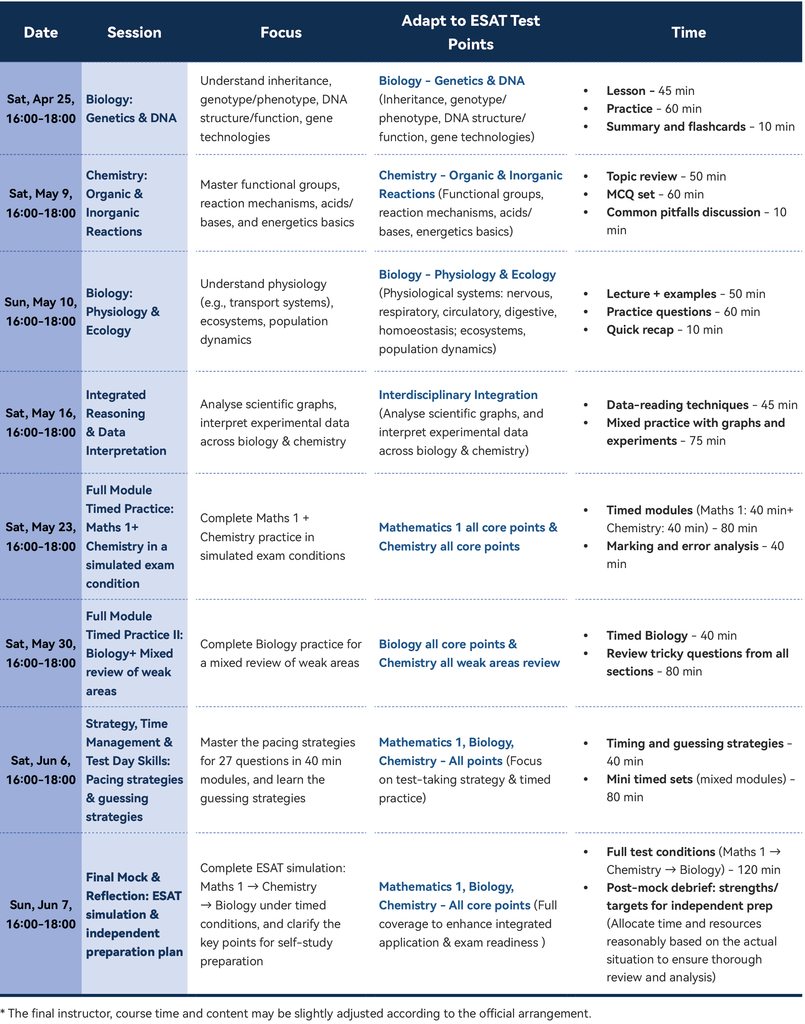
ESAT (Natural Sciences - Biology / Chemical Engineering and Biotechnology / Veterinary Medicine)

This schedule is designed to help a student:

  1. Master ESAT Mathematics 1 (Core Number, Algebra, Geometry & Statistics), Chemistry (Fundamental Principles, Chemical Reactions & Quantitative Analysis, Organic/Inorganic Reactions), and Biology (Cell Biology, Genetics & DNA, Physiology & Ecology).
  2. Develop interdisciplinary reasoning and data interpretation skills, proficiently analysing scientific charts, interpreting biological and chemical experimental data to meet the assessment requirements of integrated multi-subject knowledge.
  3. Master test-taking techniques, under timed condition answering strategies, and scientific guessing methods adapted to the ESAT “no-calculator + multiple-choice modules” format, enhancing the ability to manage the pacing of 27 questions within 40 minutes.
View more
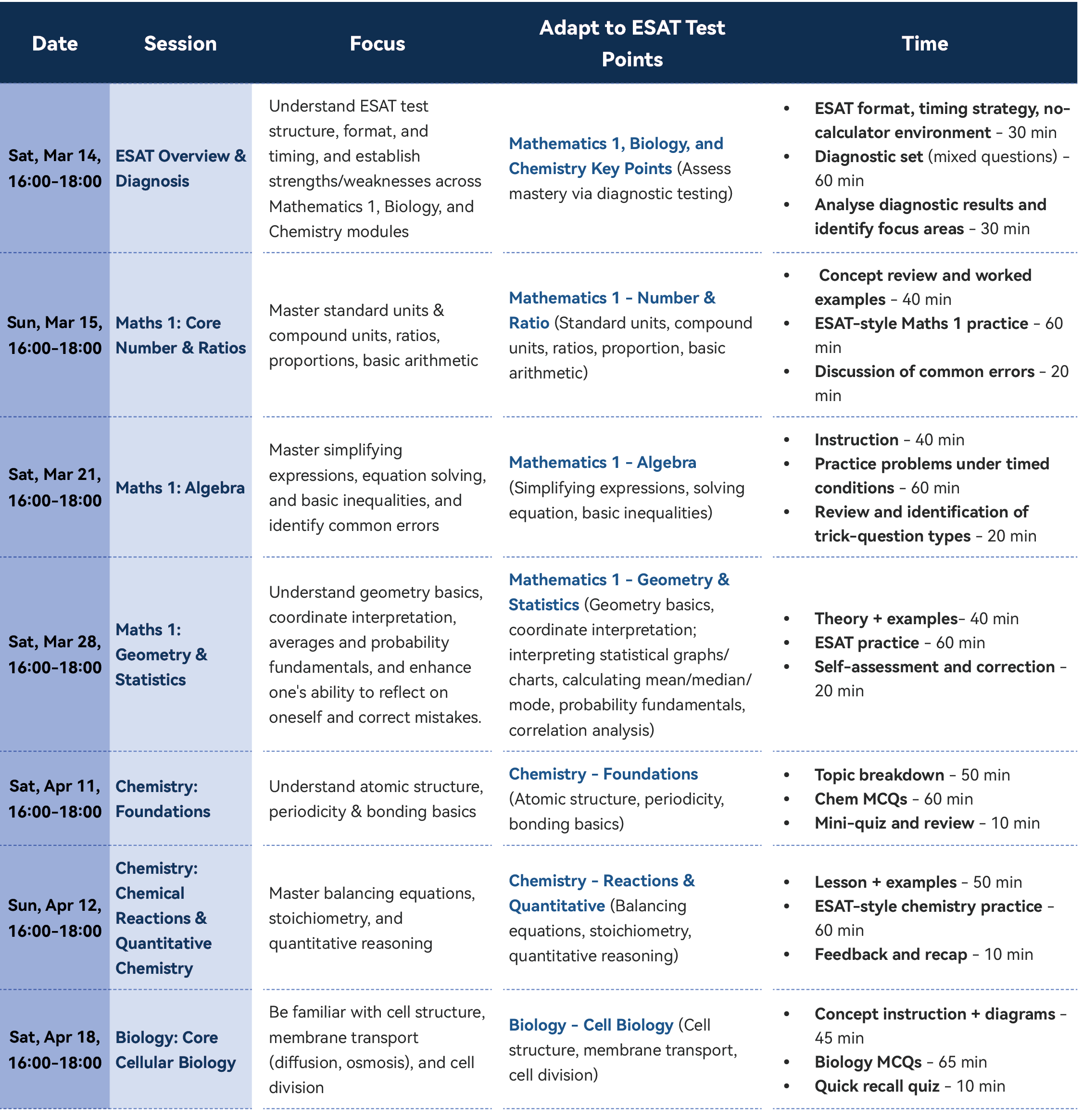
ESAT (Natural Sciences - Biology / Chemical Engineering and Biotechnology / Veterinary Medicine)
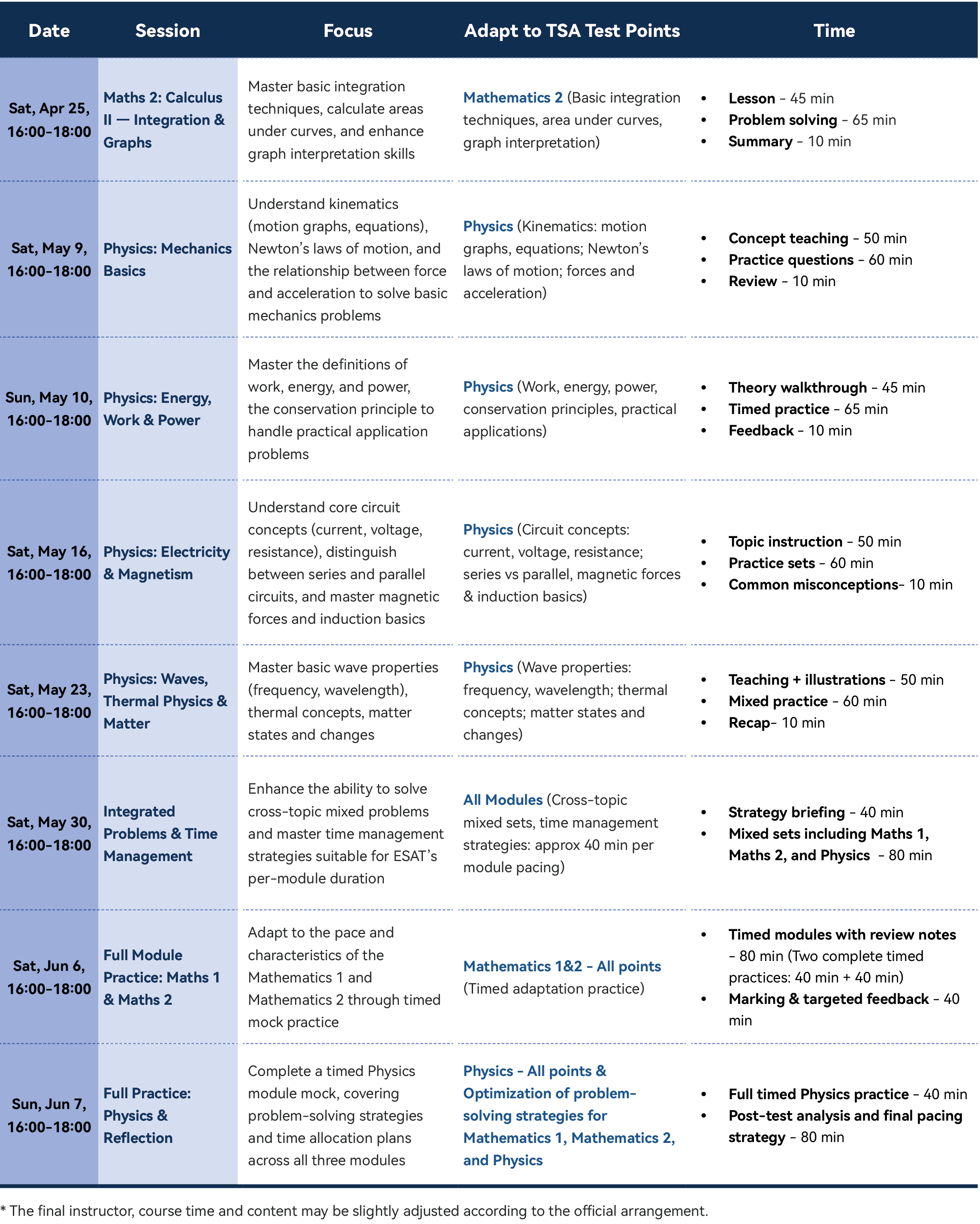
ESAT (Natural Sciences - Physics and Engineering)

This schedule is designed to help a student:

  1. Master core points of three modules: ESAT Mathematics 1 (Core Number Theory, Ratios & Proportions, Algebra, Plane Geometry, and Basic Statistics), Mathematics 2 (Advanced Algebra & Functions, Trigonometry, Coordinate Geometry, Calculus), and Physics (Fundamentals of Mechanics, Energy/Work/Power, Electromagnetism, Waves & Thermal Physics, Changes of State).
  2. Develop cross-module knowledge application and data interpretation skills, analyse mathematical function graphs and physics motion charts, and accurately perform calculations without a calculator, meeting the assessment requirements that integrate all modules.
  3. Master test-taking techniques, module-specific time allocation strategies, and efficient problem-solving methods suited to the ESAT “no-calculator + 40-minute per module under timed condition” format to enhance the ability to manage pacing and improve accuracy within each module.
View more
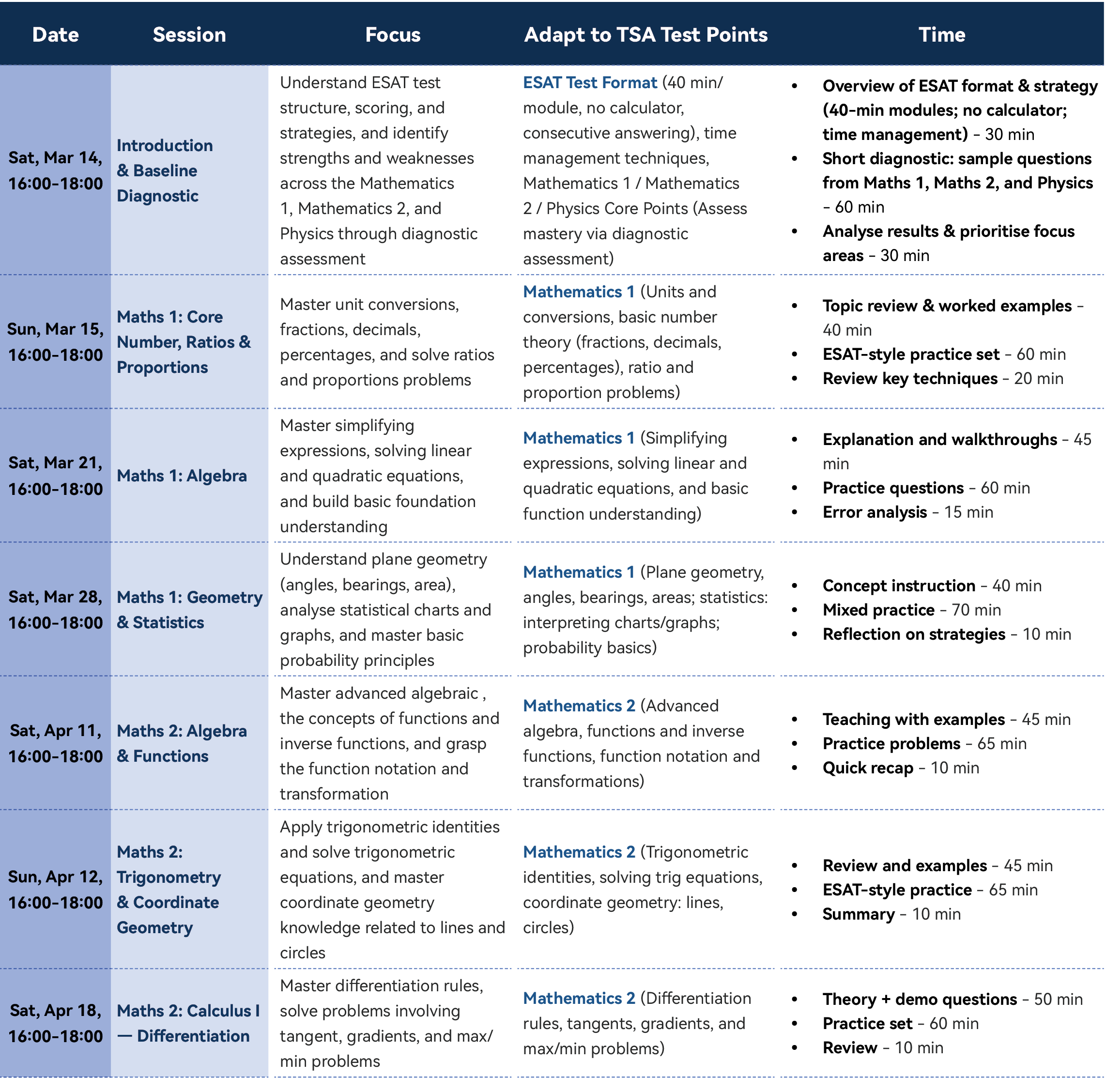
ESAT (Natural Sciences - Physics and Engineering)
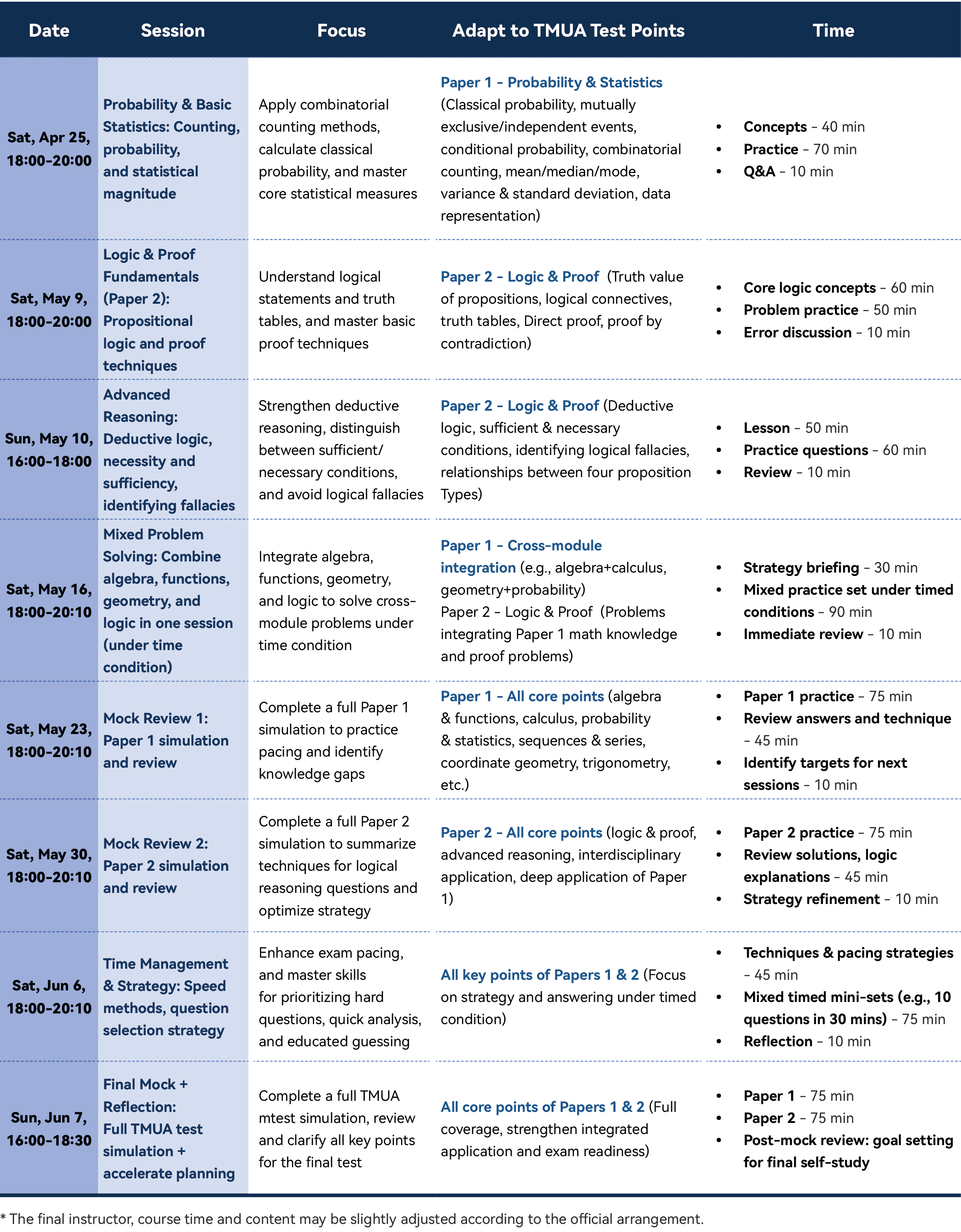
TMUA

This schedule is designed to help a student:

  1. Master key mathematical points commonly tested in TMUA Paper 1 (Applications of Mathematical Knowledge).
  2. Develop formal and informal reasoning skills for TMUA Paper 2 (Mathematical Reasoning & Logic).
  3. Build exam technique, timing, and strategy for tackling TMUA’s calculator-free multiple-choice format.
View more
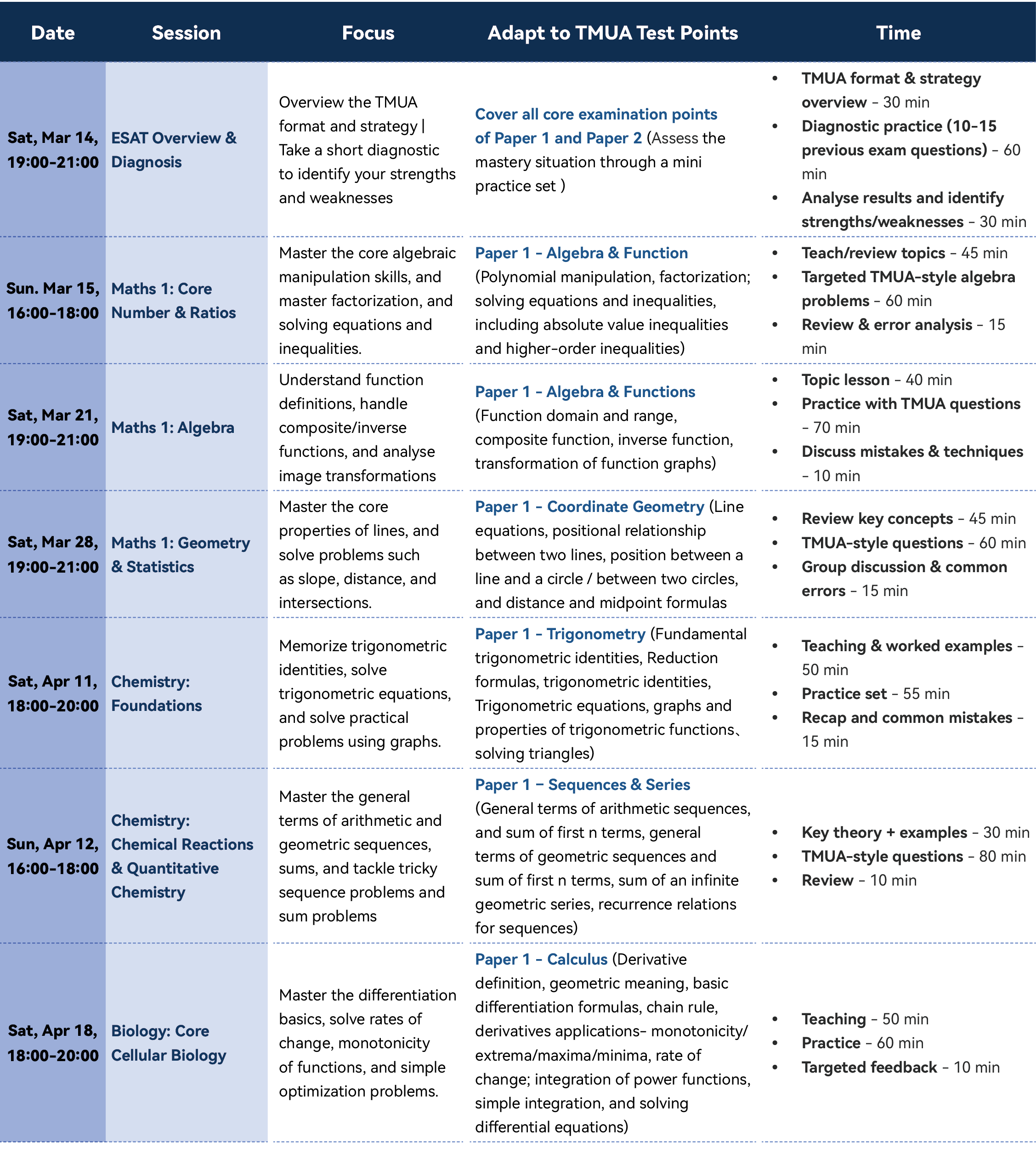
TMUA Admissions Test Training Syllabus
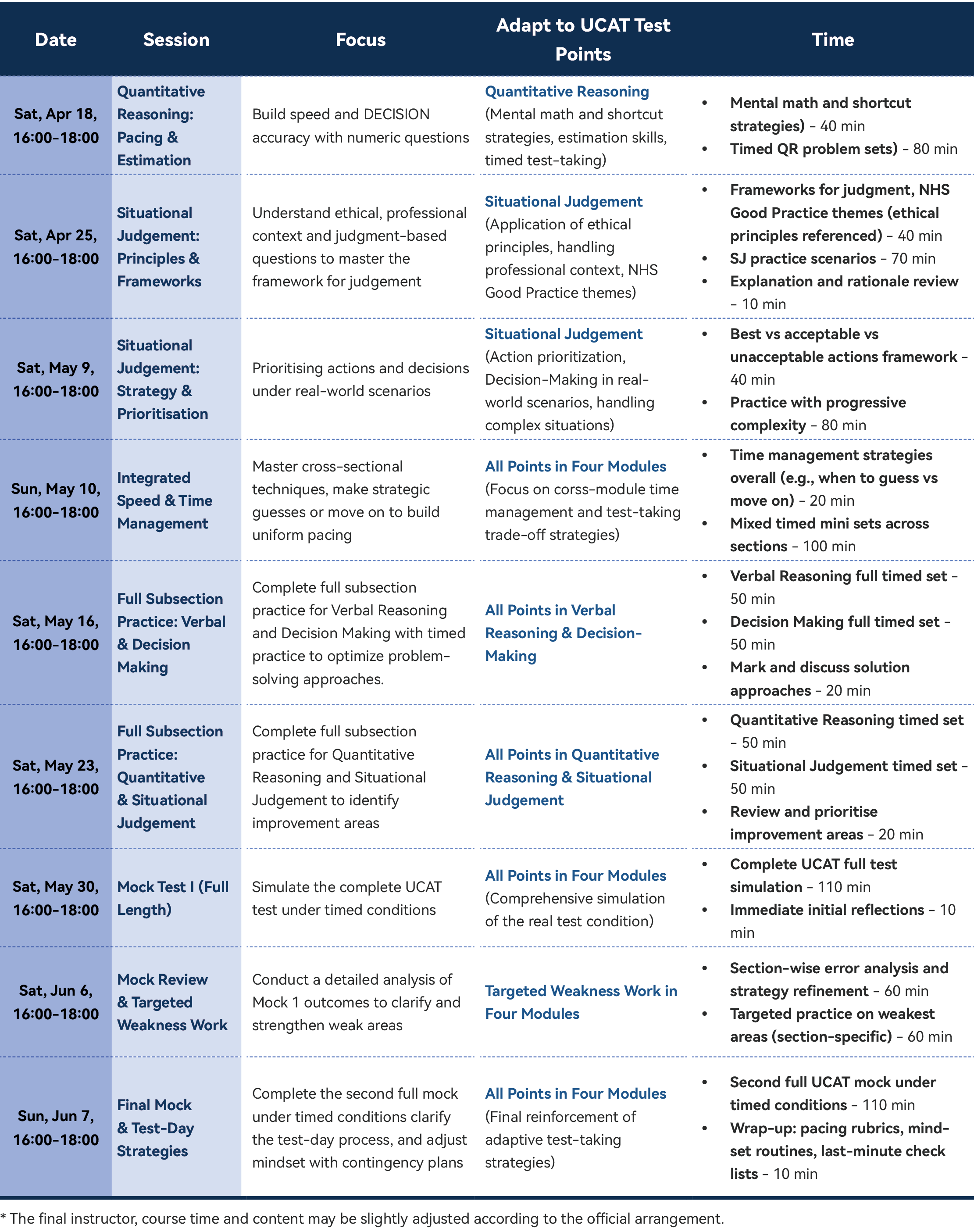
UCAT

This schedule is designed to help a student:

  1. Master the core points and question-type logic across all four UCAT modules (Verbal Reasoning, Decision Making, Quantitative Reasoning, Situational Judgment), including text comprehension, logical reasoning, numerical operations, and ethical scenario responses.
  2. Develop comprehensive cross-module test-taking abilities, including rapid information extraction, logical analysis, timed calculation, and judgment in professional scenarios, to adapt to the pacing of consecutively administered modules.
  3. Master test-taking techniques suited to the UCAT exam format, which features an “on-screen calculator (available in Quantitative / Decision Making modules) + multiple-choice questions + sequentially timed multiple modules”, along with overall time allocation strategies and methods for transitioning between modules, thereby enhancing mental stamina and answer efficiency throughout the 2-hour test.
View more
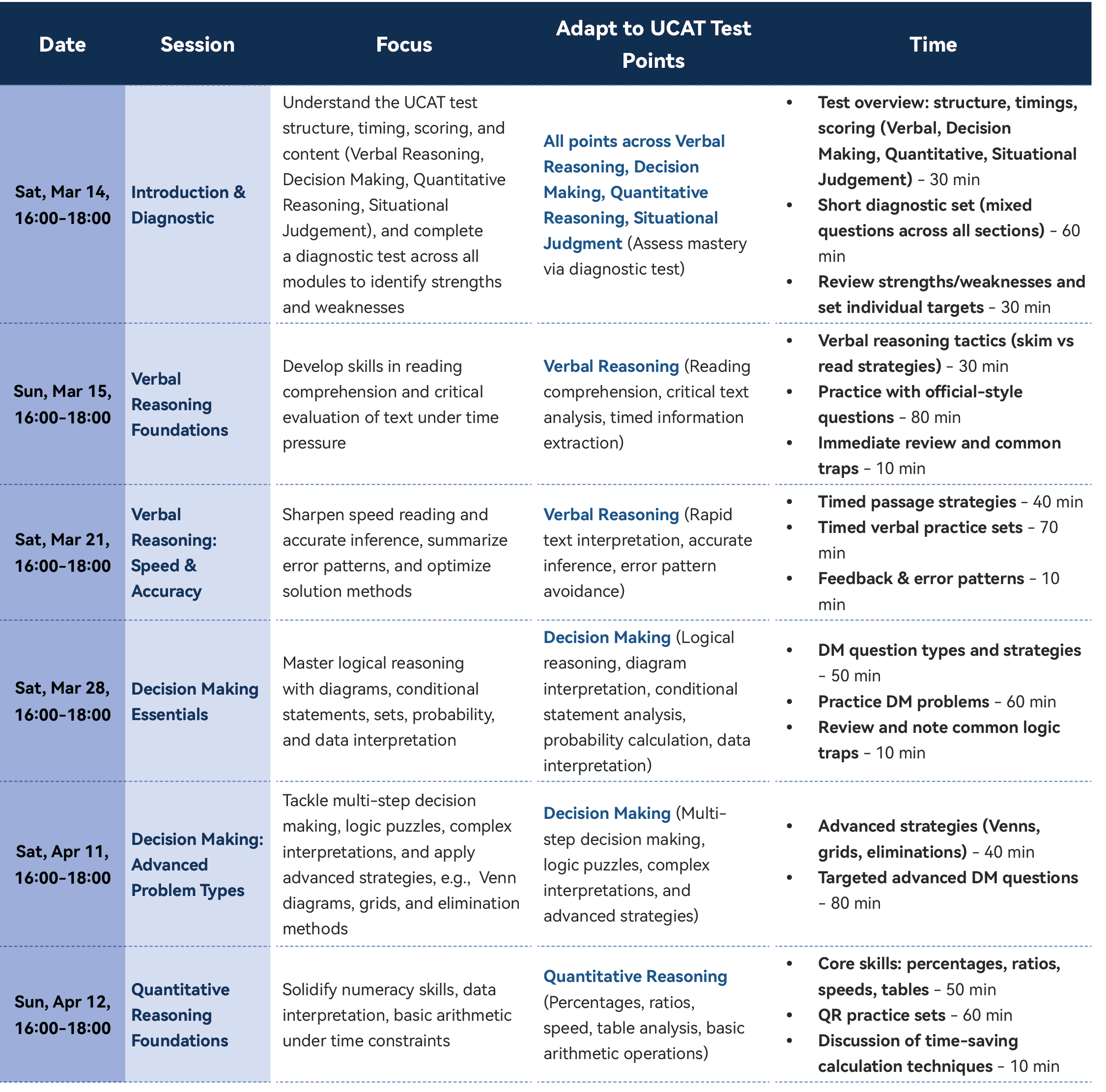
UCAT Admissions Test Training Syllabus
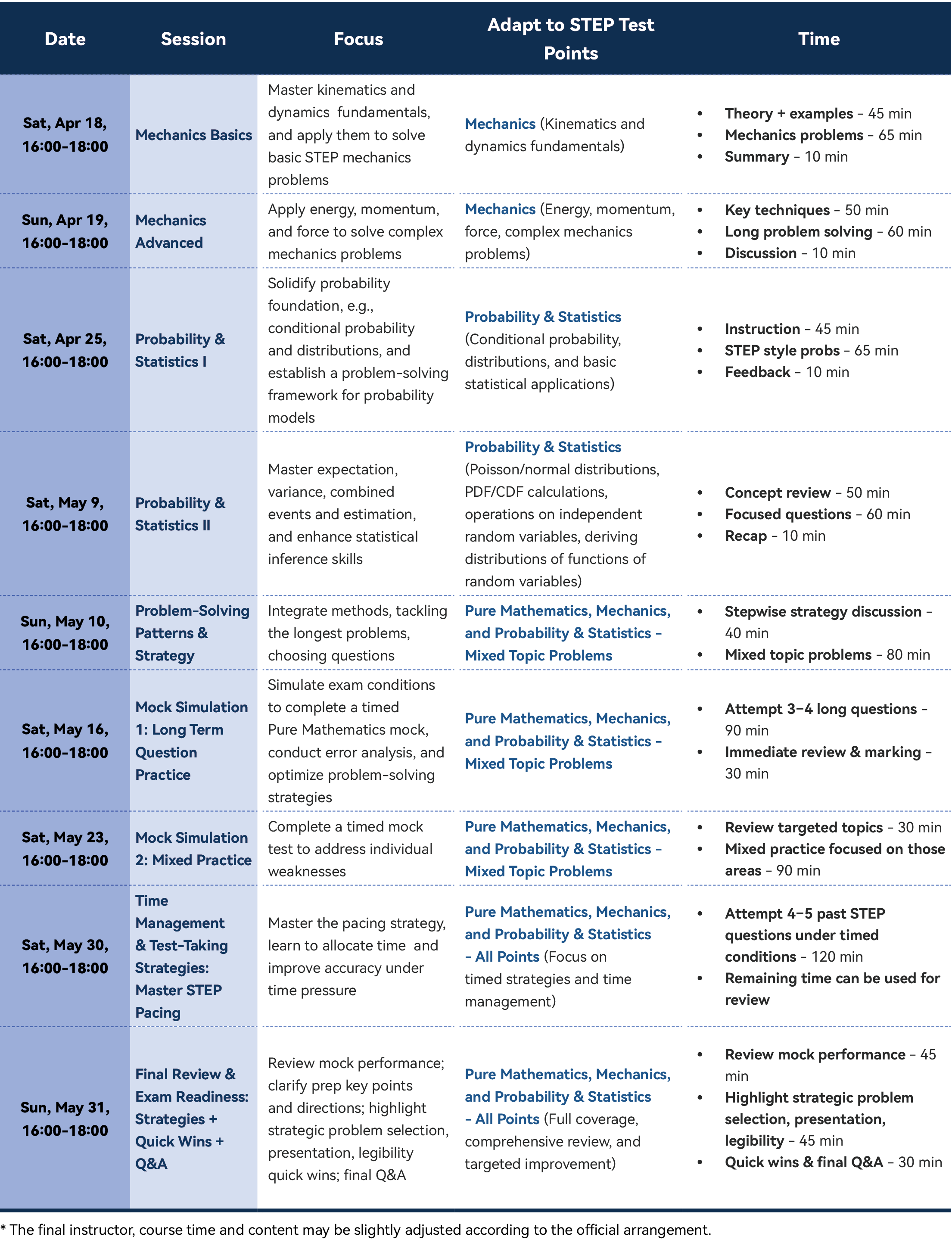
STEP

This schedule is designed to help a student:

  1. Master the core points and detailed application across all three STEP modules: Pure Mathematics (algebra, calculus, analysis and proof, geometry), Mechanics (kinematics and dynamics fundamentals, energy, momentum, forces), Probability & Statistics (probability distributions, expectation, variance, combined events & estimation)
  2. Develop the rigorous logical reasoning, creative problem-solving thinking, and the ability to tackle complex, extended problems required for the STEP test, and master the skills for writing formal proofs and presenting clear, step-by-step solutions.
  3. Develop test-taking strategies (time management & selecting and prioritizing questions) adapted to the STEP format, which features an “no calculator + long-form questions” to be answered in 3 hours, improving solution accuracy and efficiency
View more
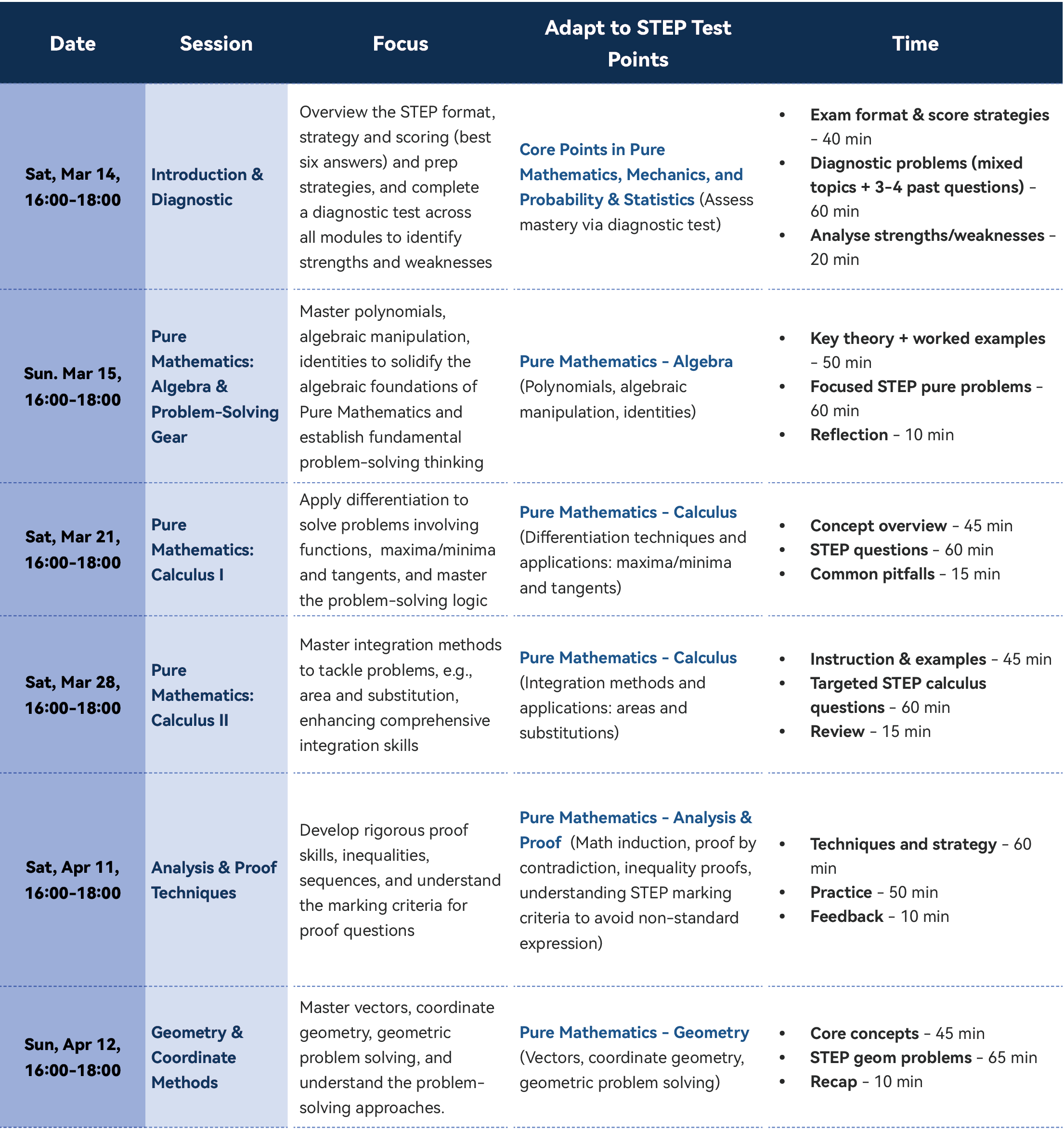
Admissions Test Training Syllabus
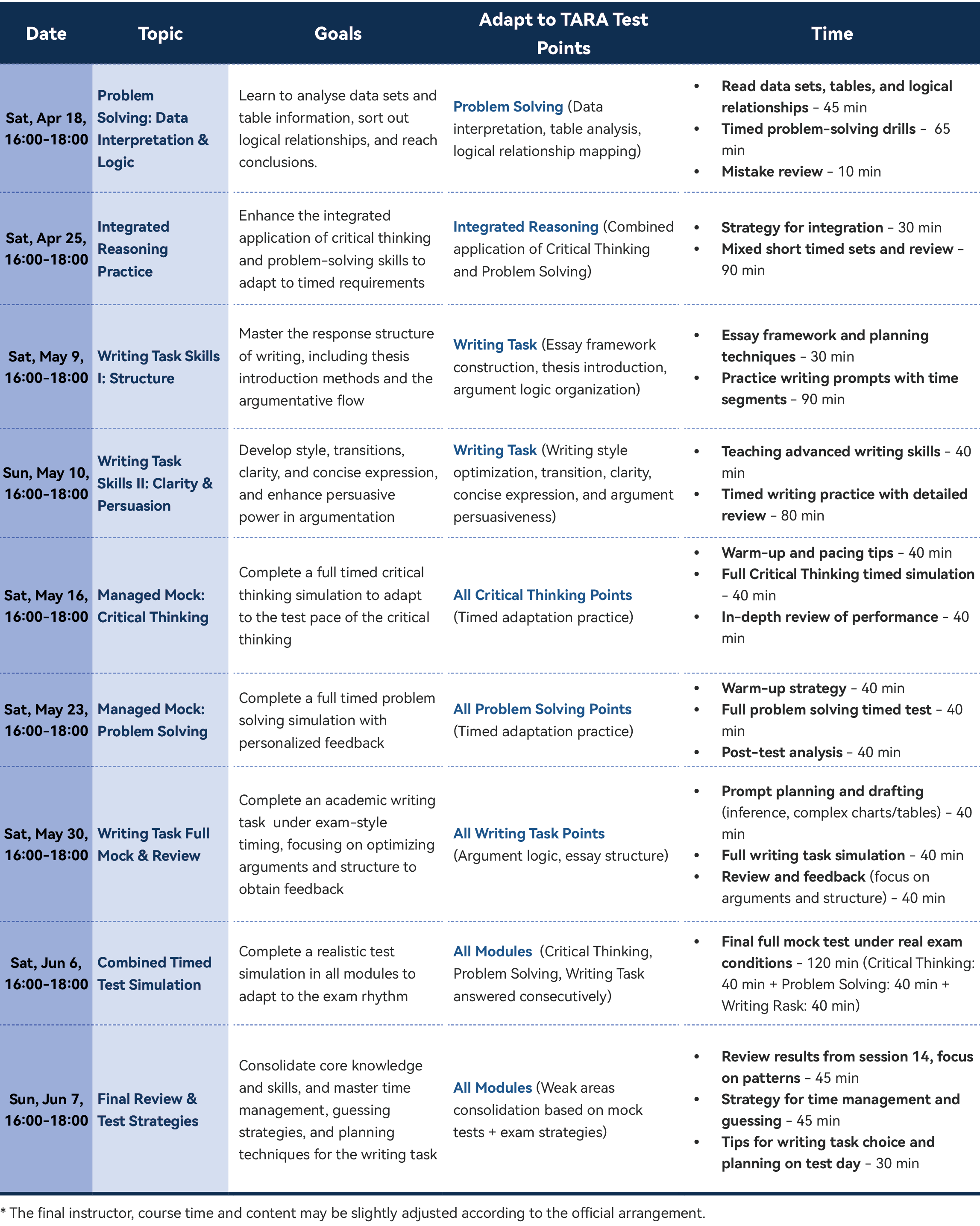
TARA

<strong style="margin-bottom: 10px; color: #0f2e50; display: block;"This schedule is designed to help a student:

  1. Master the key points of the TARA core modules (Critical Thinking, Problem Solving, Writing Task), including argument evaluation, reasoning structures, inference and assumption identification for Critical Thinking; non-numerical logic, quantitative reasoning, and data interpretation for Problem Solving; and structural organization, thesis articulation, and argumentative logic for Writing Task. Furthermore, master the framework for crafting a 750-word timed response, including viewpoint distillation and logical structuring.
  2. Develop core reasoning skills (argument analysis, logical deduction, data interpretation, pattern recognition) and structured writing abilities (thesis introduction, argumentative fluency, concise expression). Cultivate the capacity to transfer skills across modules under timed conditions, adapting to the combined assessment demands of TARA’s multiple-choice questions and academic writing task.
  3. Master test-taking techniques, module-specific time allocation strategies, and efficient problem-solving methods suited to the TARA exam format: “no calculator / no dictionary + multiple-choice questions (Critical Thinking / Problem Solving) + 750-word academic writing + 40-minute time limit per module.” Overcome key challenges such as argument evaluation traps, deconstructing data logic, and developing ideas under time pressure in writing, thereby improving answer speed, reasoning accuracy, and writing
View more
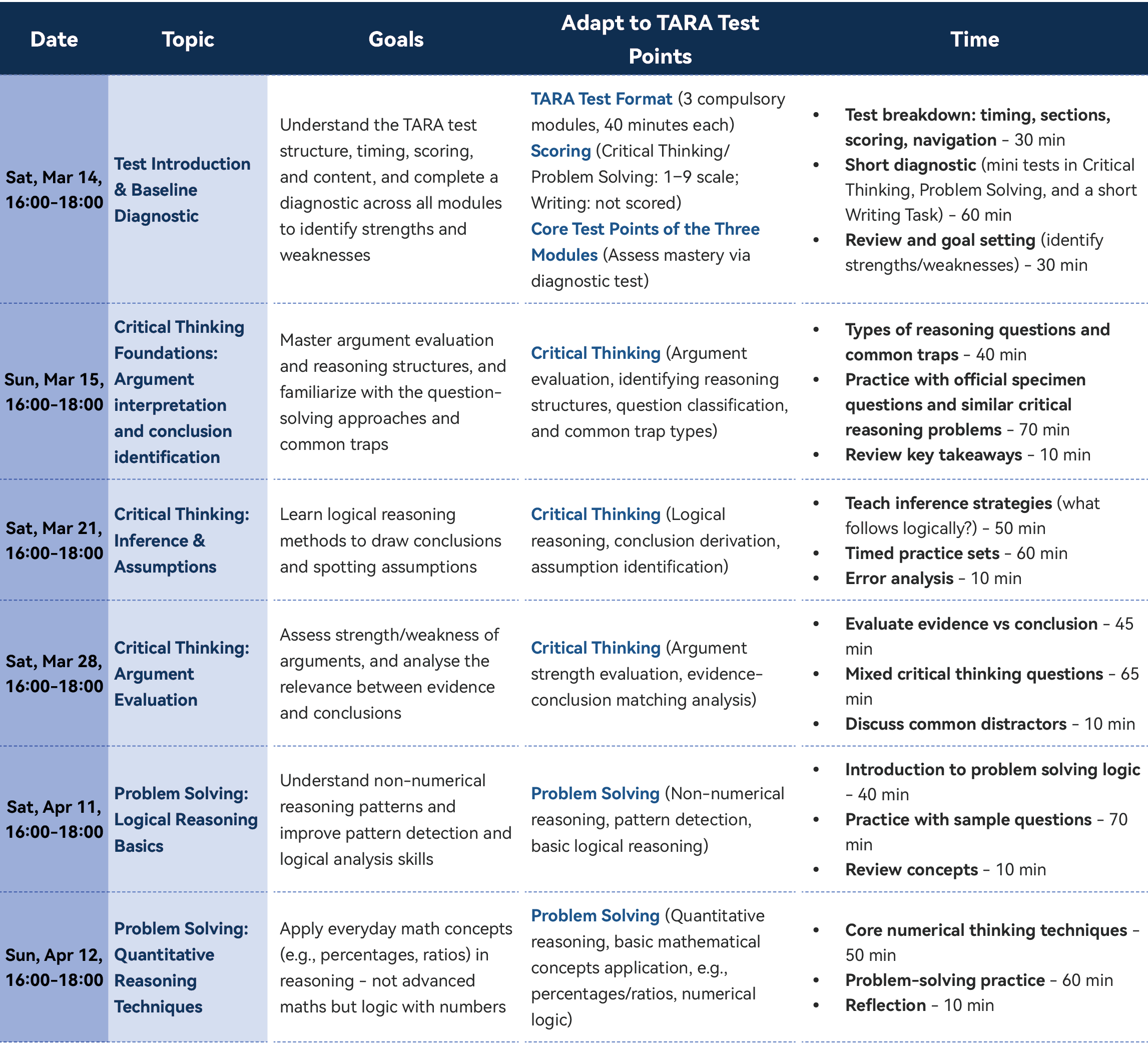
TARA Admissions Test Training Syllabus

Application

1

Information Submission and Initial Assessment

During registration, students need to provide relevant materials such as their target universities and majors, IGCSE transcripts, and AS-level school transcripts. We will conduct a initial assessment based on this information to lay the foundation for subsequent services.

Tutor Matching and Plan Confirmation

Based on the student’s application goals, intended majors, and academic proficiency level, we will accurately match them with a suitable course. The specific schedule and service plan will then be confirmed in detail with you.

2
3

Pre-programme Assessment (Applicable to Certain Services)

For test tutoring, approximately one week before the programme begins, the student must complete an online subject diagnostic assessment. This helps the tutor precisely identify the student’s knowledge gaps and strengths for a targeted tutoring.

Specialized Tutoring

After completing the above steps, targeted tutoring will commence according to the confirmed service plan, mapping with the student’s preparation pace.

4
5

Personalized Feedback & Ongoing Suppor

Upon completion of every 10-hours instruction, a periodic learning feedback report will be issued. This report will accurately track learning outcomes and clearly present specific performance and targeted analysis from multiple dimensions, including overall performance, core skills, test-taking performance, strengths and areas for improvement, common error patterns, and preparation adaptability

Information

Project Dates:

March - June 2026. Weekend online
* Please refer to the specific schedule for exact times.

Class Size:

Limited to 5 students per class.

Eligibility:

Student applying for Oxbridge & G5 universities in 2027 Fall who will sit the related admissions tests
* STEP training is also available for students applying in the 2026 Fall.

Fee:

Fees vary with different test courses.
ESAT/TMUA/UCAT/TARA: (30 hours of instruction in total)
STEP: (30 hours of instruction in total)

Customized Service
We offer flexible and diverse personalized services. Based on specific student needs (specialized training for a particular major, multiple rounds of intensive mock interviews, urgent crash courses, or customized lessons), we can tailor a special tutoring plan, including flexible adjustments to the teaching format, training content, and service details to comprehensively accommodate individual needs and help efficiently overcome application challenges.


Contact Us