


Minds Underground Economics Essay Competition


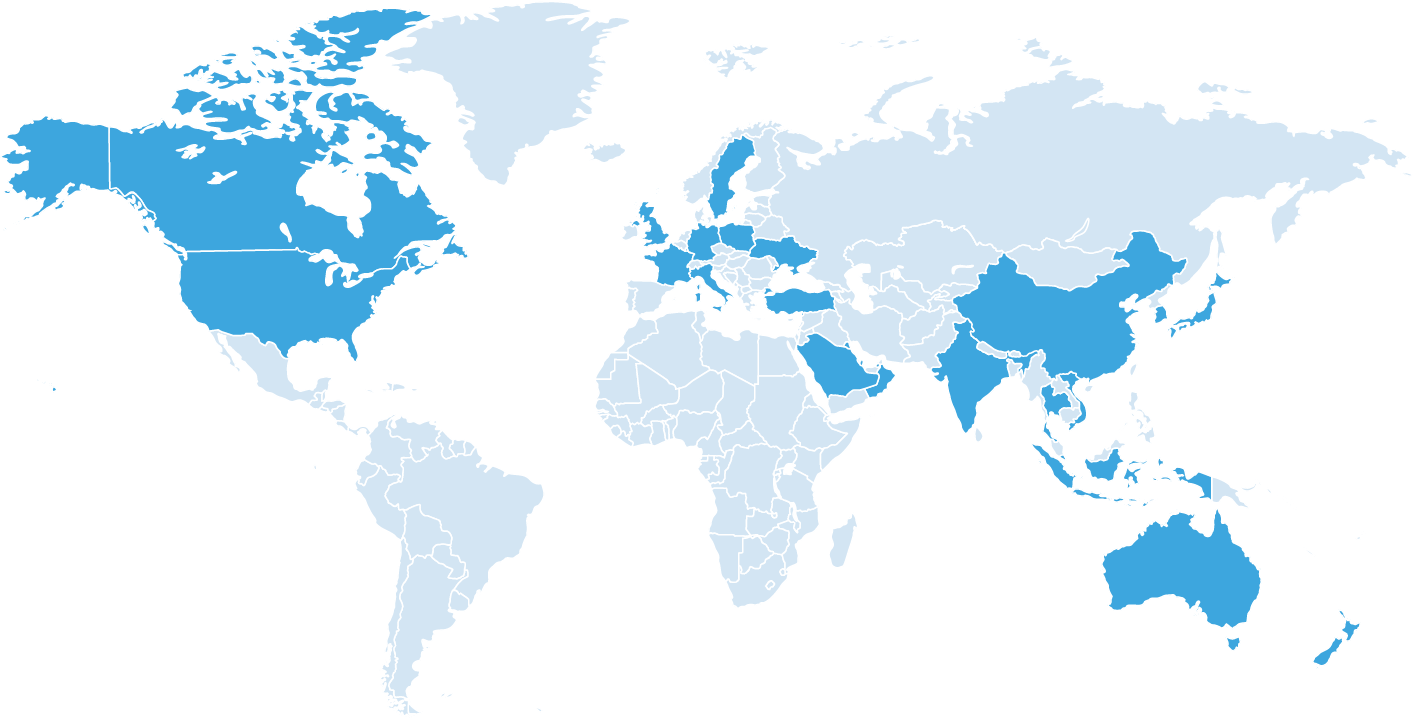
50+ countries globally participating
Over 12000 exceptional students submit annually
4 major economics research directions
Endorsed by Colleges of Cambridge and Oxford
Eligibility: 15–18 years old | Requirement: 1,000–1,500 words English essay | Registration Deadline: March 29th, 2027

Mathematical Economics

Behavioural Economics

International Economics

Environmental Economics
The MU Economics Essay Competition, organized by Minds Underground (MU). It is officially recommended by the Balliol college, University of Oxford, and Homerton college, University of Cambridge, and is designed to empower young people worldwide to examine global issues through the lens of economics. The competition encourages students to develop critical and independent insights, while fostering a lasting passion for the subject.
Covering key subfields—including international economics, mathematical economics, behavioural economics, and environmental economics—the competition offers high school students a unique opportunity to sharpen their reasoning, analytical, and communication skills.
With over 12,000 participants from more than 50 countries, the MU Essay Competition has grown into one of the most distinguished academic events in its field. Participation not only strengthens students’ intellectual abilities, but also enhances their academic profiles, interview performance, and university applications.
Exceptional participants may be invited to the Economics Camp hosted at St Catharine’s College, Cambridge, for outstanding high school students worldwide. Taught by experienced economics professors and scholars, participants delve into undergraduate-level courses including macroeconomics, microeconomics and global economic trend analysis.
All attendees shall deliver an individual presentation at the end of the program to fully apply what they have learned, with comments given by Cambridge professors and fellow participants. Students finishing all courses and presentations will obtain an official completion certificate issued by St Catharine's College, University of Cambridge, boosting their university admission competitiveness.


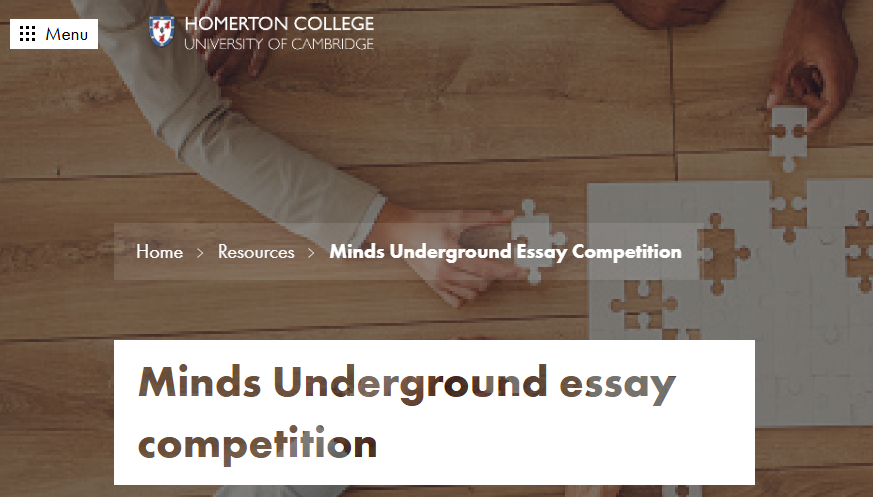
Homerton College, University of Cambridge:
Homerton College, known for its emphasis on social sciences, lists the MU Essay Competition among its recommended activities.

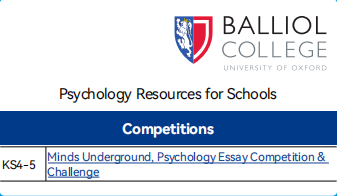
Balliol College, University of Oxford:
As one of Oxford’s oldest colleges, Balliol listed MU Essay Competition in the official recommended activity



Mathematical Economics
Mathematical economics helps us understand economic behaviors and market mechanisms in reality through model construction and quantitative analysis. The following topics include "free" product, non-priced market, and economic model, encouraging students to conduct in-depth thinking by applying game theory, utility functions, and modeling. It is suitable for students who are interested in mathematics, economics, data analysis, or those who hope to enter fields such as finance, technology, and policy study in the future. Whether it is algorithmic trading, risk modeling or financial behavior analysis, mathematical economics is an important foundation for building a rational worldview.
Topic 1: When does a “free” product become too expensive?
Hints: Model attention, data, or time as costs. Consider platform economics, utility trade-offs, and hidden pricing. Can you formalise the idea of “paying with something other than money”?
Topic 2: Can a market exist without prices? Design one.
Hints: Think about allocation through queues, algorithms, reputation, or social norms. What replaces price signals? Would it be efficient or stable?
Topic 3: If you could rewrite one assumption in a standard economic model, which would you change and why?
Hints: Perfect rationality? Complete markets? Information? Explore how altering a single assumption reshapes predictions.


Behavioural Economics
Behavioural economics focuses on the decision-making patterns of human beings under the influence of limited rationality, emotions and psychological biases, revealing why people in the real world often consume, invest or make judgments "irrationally". The following topics encourage students to explore the deep logic behind economic behaviour from the perspectives of consumer bias, expectations, and signalling. This field is widely applied in marketing, business behaviour research, policy design, etc., and is an important tool for understanding human behaviour and formulating effective strategies. It is suitable for students who are interested in the intersection of human nature, social phenomena and economic decision-making, especially for those who hope to pursue careers in business, public administration and psychology in the future.
Topic 1: Are emotions a market failure or a market feature?
Hints: Consider fear, joy, status, guilt. Do markets exploit emotions, correct them, or depend on them? Link to advertising, finance, or consumer behaviour.
Topic 2: If an algorithm makes economic decisions for you, who is responsible for the outcome?
Hints: Consider how individuals delegate decisions, how trust and incentives shape behaviour, and whether this changes our understanding of rationality.
Topic 3: Can you design a policy that makes people happier without increasing their income?
Hints: Think about behavioural nudges, social comparison, expectations, time use, or mental health. How would you measure success?


International Economics
International economics studies trade, capital flows, monetary policy among countries, helping us understand the interweaving of economy and politics in the era of globalization. The following topics focus on key issues such as globalization, weak currency and state competition for citiziens, encouraging students to comprehensively analyze policies, technologies, geopolitics, and market mechanisms. International Economics is widely applied in fields such as international finance, transnational policy, and global market analysis. It is suitable for students who hope to engage in international economics research, international financial investment, international relations or economic policy research in the future.
Topic 1: Is globalisation reversible, or has the world passed a point of no return?
Hints: Supply chains, geopolitics, digital trade, and institutions. What would “deglobalisation” actually look like in practice?
Topic 2: Who really benefits from a weak currency?
Hints: Go beyond exports. Consider inequality, consumers vs producers, inflation, and political incentives.
Topic 3: If countries competed for citizens instead of capital, how would the global economy change?
Hints: Think about migration policy, taxation, public goods, and “voting with your feet”


Environmental Economics
Environmental economics focuses on sustainable development under limited resources and ecological pressure. And it suggests the application of economic tools to analyze environmental value, externalities and policy effects. In an era of intensifying ecological crises, this discipline is becoming increasingly crucial. The following topics focus on issues such as climate policy, pollution issues and environmentally damaging behaviors guiding students to think about how to use economic models and policies to address climate challenges and ecological imbalances. This field is widely applied in areas such as green finance, environmental policies, and corporate sustainable strategies. It is suitable for students who are interested in nature, social responsibility, and systemic issues and are willing to propose innovative solutions from an interdisciplinary perspective.
Topic 1: Would future generations choose the same climate policies we do today?
Hints: Discount rates, intergenerational equity, uncertainty, and political incentives. Can we represent future preferences?
Topic 2: Is pollution a failure of markets, governments, or imagination?
Hints: Externalities, regulation limits, and innovation. Could entirely new systems outperform current approaches?
Topic 3: Should environmentally harmful behaviour be taxed, banned, or socially stigmatised?
Hints: Compare economic incentives vs cultural change. Which is most effective and why?

Winner
Runner Up
Highly Commended
Commended






Academic sessions
 Economics Lectures
Economics lectures would be given by an economics lecturer or industry experts, deeply analyzing the research methods and practical significance of a complex economic issue, and enable students to understand how a true economist thinks about problems, analyzes models and constructs viewpoints.
 Oxbridge application workshop
Specially designed for students who are determined to apply for an economics major at Oxford or Cambridge. It provides in-depth explanations on the course structure, interview format, credit requirements and preparation suggestions related to the admission of economics.
Cultural experience
 Formal dinner
Take part in a traditional Cambridge formal dinner—an iconic part of college life. Dressed in formal attire, students will enjoy fine dining, and thoughtful conversation in a historic setting.
 Accommodation at Oxford
Stay in the historic college dormitories of the University of Oxford, and immerse yourself in the academic and cultural atmosphere.