
PERFORMING SHAKESPEARE COMPETITION ASIA CUP

Elevating the Classics, Illustrating Your Confidence
Organised by the century-old ESU

Opportunity to perform at Shakespeare’s Globe, UK

A prestigious youth drama competition in the UK and the US

Exclusive Shakespeare drama stage for students aged 9-18

Attracts over 10,000 participants globally

About ESU

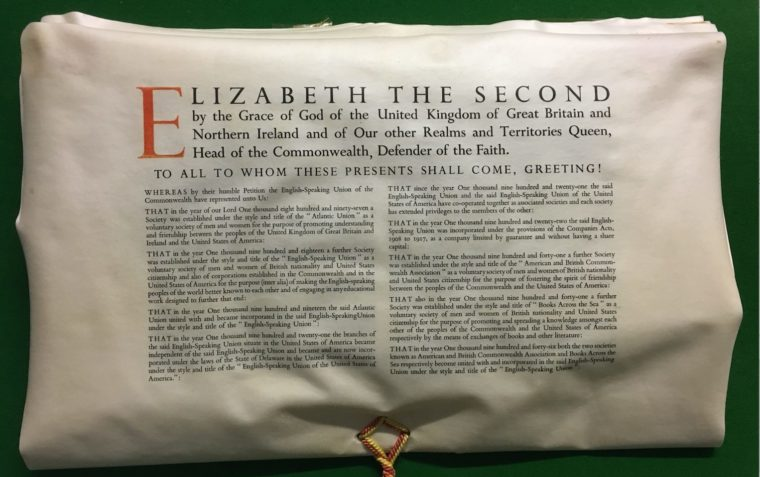
The English-Speaking Union (ESU), established in 1918 and founded by Sir Evelyn Wrench, is one of the United Kingdom's oldest educational charities. The ESU has long been governed by Royal Charter and was patronised by Her Late Majesty Queen Elizabeth II from 1957. Former British Prime Minister Sir Winston Churchill and His Royal Highness The Duke of Edinburgh both served as president. Her Royal Highness The Princess Royal now serves as President.

The ESU is headquartered at Dartmouth House in London and currently has 54 branches around the world, reaching over one million young people globally. As a global educational network, the ESU is dedicated to fostering intercultural dialogue through English, facilitating communication and collaboration across countries and regions.

Programme Introduction

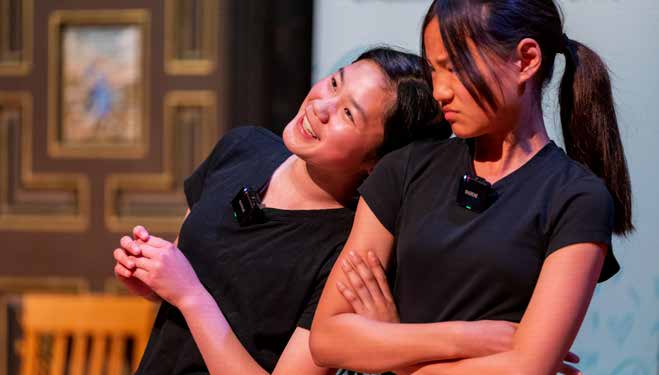
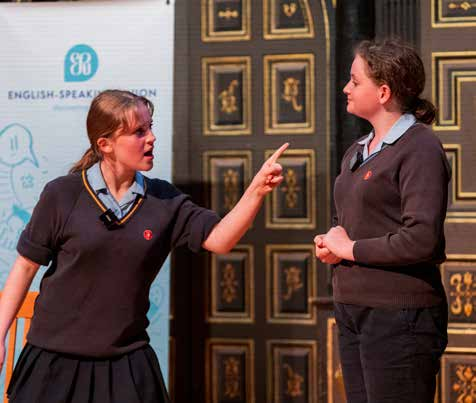
The ESU Performing Shakespeare Competition is a prestigious drama competition hosted by the English-Speaking Union (ESU) in England and Wales. It aims to foster students' oracy skills, confidence and stage presence through performing excerpts from Shakespearean plays.

Starting from 2026, ASEEDER has officially formed a strategic partnership with ESU to introduce the ESU Performing Shakespeare Competition to Asia for students aged 9–18, Participants will select and perform a monologue or dialogue from a Shakespeare play, followed by a brief introduction to the chosen piece. Through reading, analysing, and performing Shakespeare’s works, students will not only deepen their appreciation of literature, but also develop essential communication and performance skills that extend far beyond the stage.
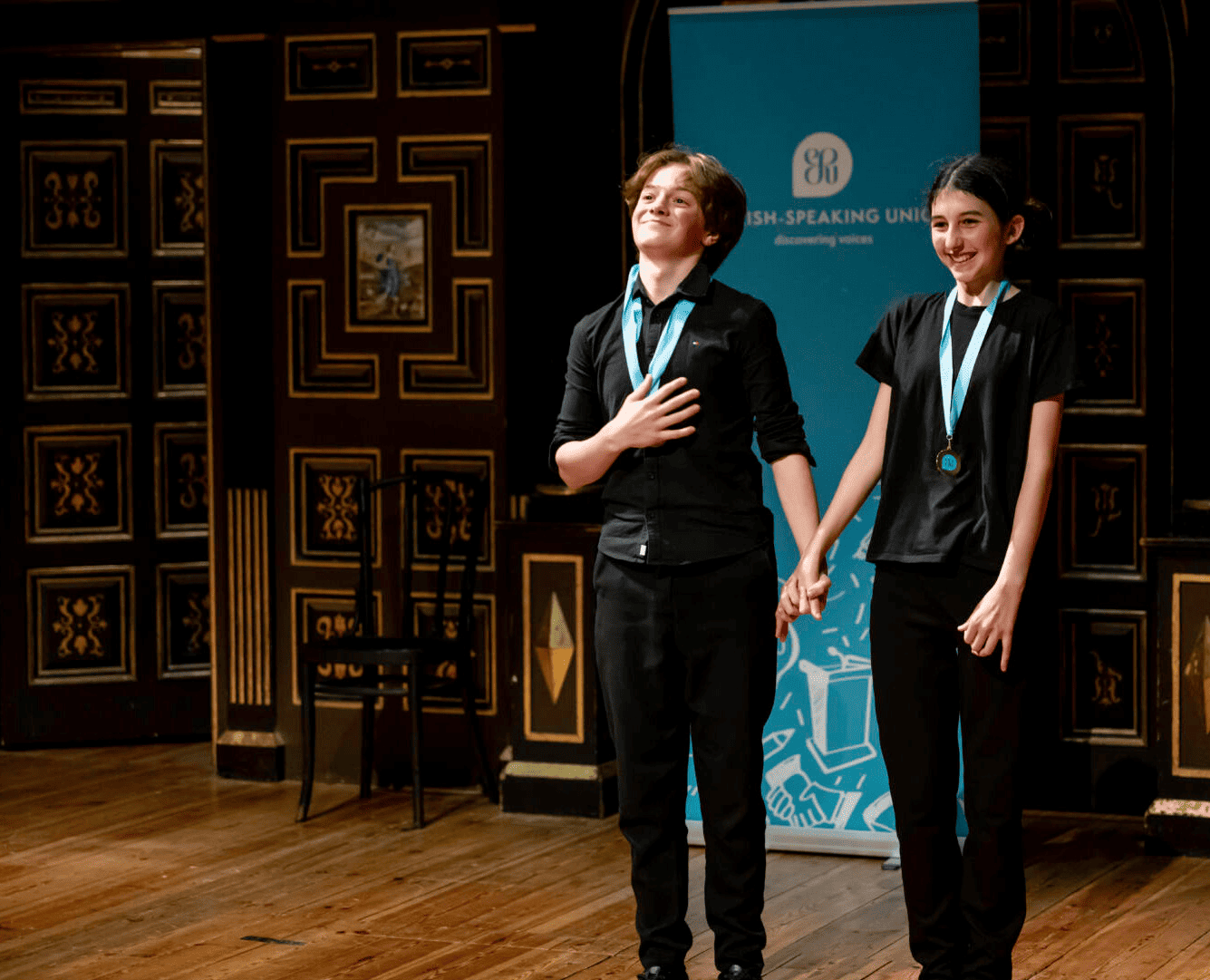
Global Influence

ESU National Shakespeare Competition

This competition is organised by ESU-USA and operates independently from the UK ESU’s competitions.

Established in 1983, the ESU National Shakespeare Competition is a prestigious and nationally recognised competition in the United States. It is supported by organisations including the Globe Centre (USA), the Children’s Theatre Foundation of America, and the American Academy of Achievement, and aligns with local, state, and national English Language Arts and drama curriculum standards.

750+

schools across 50 competition regions nationwide

15,000+

annual participants

100%

teachers report noticeable growth in students’ confidence, communication, and oracy skills

ESU Performing Shakespeare Competition

Established in 2011, the ESU Performing Shakespeare Competition is one of the leading national Shakespeare performance competitions in the UK for Key Stage 3 students. Developed in partnership with Shakespeare’s Globe in London, the competition offers finalists the opportunity to perform on the Globe stage and showcase their talents before a panel of professional actors and drama specialists. Aligned with the UK National Curriculum, the Programme is dedicated to deepening students’ understanding of classic literature through the performing arts.

2,000+

annual participants

100+

schools across England and Wales

100%

Finalists will be invited to Shakespeare’s Globe in London, where they will take the stage for the ultimate showcase on a venue steeped in over 400 years of theatrical heritage.

Judge Panel

Joseph Graves

  • Academic Director of ESU Performing Shakespeare Competition Asia Cup
  • West End Theatre Director
  • Former Professor at Peking University, with extensive experience supporting students in gaining admission to leading universities worldwide, and a strong focus on enhancing English proficiency through theatrical practice
  • Creator, director, and performer of the original English one-man show Shakespeare Alone, which premiered in Beijing in 2006 and has toured multiple cities across China

Yihuan Wei

  • Jury Member of ESU Performing Shakespeare Competition Asia Cup
  • Actor, Director and Performance Coach
  • MA in Classical Theatre Performance, The George Washington University, USA
  • Has performed in numerous productions including Mozart: The Rock Opera, Les Choristes, and Shakespeare’s Macbeth

Shi Li

  • Jury Member of ESU Performing Shakespeare Competition Asia Cup
  • International theatre producer, director, and script translator
  • Co-Artistic Director, Institute of Foreign Drama and Film Studies, Peking University
     

Advanced Pathway

1

Preliminary Round

Individual or Duo Entry: June–October 2026

Academic Support

Performing Shakespeare Example Monologues

Academic Preparation

Prepare your performance using the provided Academic Handbook and supporting materials.

Performance Showcase Videos

Access nearly 100 awardwinning examples from past competitions to learn effective acting techniques and stage presentation skills.

Script Resources

After registration, students receive a curated selection of 200+ monologues from Shakespeare’s 37 plays, covering 100+ characters, for practice and performance.

Programme Benefits

Official Certificate of Participation and Award Certificates.

Academic Guidance

Gain expert guidance on the judging criteria, selecting a suitable monologue, and interpreting characters and texts.

Online Resources

Access a wealth of online learning materials and supplementary resources to deepen understanding of Shakespeare’s works and continuously develop performance skills.

2

UK All-Stars Annual Showcase

Invitation Results Released: November–Early December 2026

* Only participants who achieve the designated qualifying score in the Asia Cup will be invited to attend the ESU UK National Finals and take part in a showcase performance at Shakespeare's Globe, the world's most iconic venue for Shakespearean theatre.

Event Dates: June 2027 (TBC)

Academic Highlights

  • Participate in Shakespeare drama workshops officially organized by ESU.
  • Attend the ESU Performing Shakespeare UK National Finals and experience the intensity of top-level theatrical performance.
  • Join UK students in an international showcase performance at Shakespeareıs Globe.

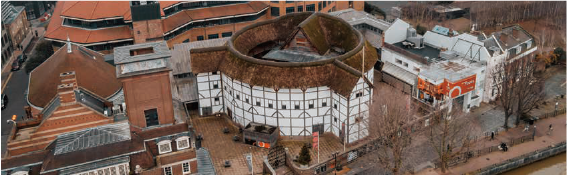
Shakespeare’s Globe is a historic reconstruction of the original Globe Theatre, built in 1599. The original theatre was one of the most important public playhouses of the Elizabethan era and the venue for many of Shakespeare’s greatest works. Its open-air design, thrust stage, and lively standing audience created a distinctive theatrical experience. Destroyed by a fire caused by a stage cannon in 1613, the theatre was later rebuilt. Today, Shakespeare’s Globe continues this rich theatrical tradition and remains a renowned venue where performers and audiences from around the world can experience Shakespeare’s plays.

Programme Benefits

Participants who complete the showcase performance will receive an official ESU Certificate of Achievement, a distinguished international credential that strengthens their academic portfolio.

Cultural Experience

Visit Shakespeare’s Birthplace to explore where he was born and raised, gain insight into his early life and surroundings, admire Elizabethan architecture and exhibitions, and experience the cultural atmosphere of the Renaissance—providing a rich historical and cultural context to enhance performance and understanding of his works.
Programme Information

1. Age Categories

  • Primary School Group: Grades 4-6
  • Middle School Group: Grades 7-9
  • High School Group: Grades 10-12

2. Competition Format

  • Monologue
  • Duologue

*Participants will select a classic excerpt from Shakespeare’s works to perform and submit a video entry for the Preliminary Round.

3. Work Selection

The ESU provides some sample extracts, but these are not exhaustive; we welcome entries from any of Shakespeare’s 37 plays.

4. Text Selection

  • Competitors are only permitted to perform excerpts from one of Shakespeare’s plays as recognised by the Shakespeare Birthplace Trust: William Shakespeare Plays.
  • Excerpts from sonnets and narrative poems are not permitted.
  • Excerpts may be edited to ft the needs of the performance (i.e. number of actors and/or performance time); characters/lines may be removed as long as the piece maintains logical sense.
  • The actual language of the piece (i.e. vocabulary and syntax) cannot be altered.

5. Props and Costumes

• Props
No props are allowed during a presentation, except for one straight-backed chair per performer.
One chair will be provided for monologues, and two chairs will be provided for duologues.
Please note that a performer may only use one chair during their performance (i.e. two chairs during a duologue cannot be used simultaneously by one person)
Performers are not allowed to use items of clothing (i.e. jackets, shoes, hats etc.) as props; Should a performer wish to evoke the presence of a prop, they may do so through mime.
• Costumes
No costumes are allowed to be worn during a presentation.
The only acceptable clothing is all black (plain) or school uniform, whichever is more comfortable.
Should a performer wish to evoke the presence of a specific item of clothing, they may do so through mime.

6. Competition Duration

Each round consists of two components: the Oracy Component and the Performance Component. The specific time requirements for each category are outlined below:

Category Total Time Limit Oracy Performance Time Limit

Primary School Group

(Grades 4-6)

3 minutes
1 Minute Introduction
*Participants are required to give a 1-minute introduction prior to their performance, including the title of the play, the selected scene, and their reason for choosing the excerpt.
2 minutes
Secondary School Group
(Grades 7-9 and 10-12)
* Junior high and senior high divisions are judged separately
5 minutes
2 Minutes Introduction
*Participants are required to give a 2-minute introduction prior to their performance, including the title of the play, selected scene, character details, reasons for choosing the excerpt, as well as key themes and intended performance objectives.
3 minutes

Primary School Group:0.5 points deducted for every 15 seconds over or under the time limit.
Secondary School Group:0.5 points deducted for every 30 seconds over or under the time limit.

7. Awards


Gold Award: Top 15%

Silver Award: Top 15.01% - Top 25%

Bronze Award: Top 25.01% - Top 50%

Scoring Criteria

Oracy Component

Criteria is laid out for gradings one, three and fve. Two and four are not described but fall in between the grades on either side.
Category 1 (Emerging Talent) 3 (Class Act) 5 (Show Stopping)
Interpretation of Text
How well the performer understands andpresents the text
themes, personalisation, time management
  • Basic understanding of the text with little creativity. They interpret the text with limited inventiveness and analysis.
  • No connection of the piece to outside sources (i.e. art, history, current/personal events, etc.) or explanation of its relevance.
  • Short and basic introduction of the piece.
  • Creative and thoughtful understanding and interpretation. They interpret the text with a degree of inventiveness and some analysis.
  • Moderate connection of the piece to outside sources (i.e. art, history, current/personal events, etc.) and brief explanation of its relevance.
  • Thorough introduction that sets up the performance well.
  • Exceptionally creative and deeply thoughtful understanding and interpretation. They interpret the text with great inventiveness and in-depth analysis.
  • Seamless connection of the piece to outside sources (i.e. art, history, current/personal events, etc.) and clear explanation of its relevance.
  • Compelling introduction that grabs attention and sets the stage perfectly.
Success in Realising Artistic Intention
How well the performer expresses the intended message and emotions of the piece
continuity, connection
  • Limited connection between what they say and how they act. Rarely display/connect/relate to the intention and analysis outlined in the oracy element when delivering the piece.
  • Basic performance and understanding that displays an incohesive piece of theatre.
  • Clear and frequent alignment between the performer's intentions and their actions. Occasionally display/connect/relate to the intention and analysis outlined in the oracy element when delivering the piece.
  • Well-connected performance and understanding that leaves a noticeable impact and displays a standard piece of theatre.
  • Exceptional alignment between intentions and actions, with everything working together perfectly. Displays/connects/relates to the intention and analysis outlined in the oracy element when delivering the piece.
  • Advanced performance connected to thorough understanding that generates an impactful piece of theatre.

Performance

Category 1 (Emerging Talent) 3 (Class Act) 5 (Show Stopping)
Vocal Skills
How effectively the performer uses their voice to enhance the performance
pace, inflection, intonation, pitch, projection
  • Lack of vocal projection throughout the space and no use of volume for artistic effect.
  • Little to no variation in tone, pitch, or inflection.
  • Use of pauses in a way which is at odds with the piece; no variation of rhythm.
  • Creation and demonstration of a basic vocal response to character mood and developing situation.
  • Good vocal projection that adds to the performance and effective use volume for artistic effect.
  • Occasional variation in tone, pitch, and inflection.
  • Use of pauses at one or more significant moments; slight variation of rhythm.
  • Creation and demonstration of a secure vocal response to character mood and developing situation.
  • Outstanding vocal control that fully commands the space. Successful vocal projection that fills the space and astute use of volume for artistic effect.
  • Masterful variation in tone, pitch, and inflection, creating a dynamic and engaging performance.
  • Use of pauses to structure the performance; noticeable change of rhythm.
  • Creation and demonstration of a confident and imaginative vocal response to character mood and developing situation.
Physical & Technical Skills
How the performer uses their body and the space to enhance their performance
movement, body language, facial expression, gesture, space
  • Limited movement and physical expression, often awkward or mismatched with the piece.
  • Use of stillness in a way which is at odds with the piece.
  • Use of space in a static way, orienting most of the performance "audience out."
  • Duologue only: Minimal support for each other.
  • A wide range of performance choices with purpose to affect a clear, confident and consistent interpretation of character and situation.
  • Stillness and movement are used to structure the performance effectively.
  • Use of space in a dynamic way, orienting entire performance "audience out."
  • Duologue only: Strong collaboration that enhances both performances.
  • Exceptional physicality that transforms the performance space, fully immersing the audience. An extensive range of performance choices to bring nuance, purpose and add resonance to the interpretation of character and situation.
  • Stillness and movement are integral features that structure the performance.
  • Use of space in a compelling and inventive way, orientating the entire performance "audience out."
  • Duologue only: Creative, seamless collaboration, with each performer enhancing the other's strengths.

Video Recording

    1. Language: English
    2. Participation Format: Online submission of performance videos
    3. Video Duration: The required duration varies by category (Primary School Group: 3 minutes; Secondary School Group: 5 minutes). In principle, participants' videos must not exceed the stipulated time. It is recommended that participants rehearse extensively before formal recording to ensure the final submission meets the duration requirements.
    4. Equipment Requirements: A high-quality recording device is required. The device must remain stable throughout the recording process.
    5. Environment Requirements: Participants must be fully visible (head to toe) in the frame. Ensure the examination space is well-lit and clear, with a quiet and non distracting background. Recording in a bedroom is strictly forbidden.
    6. Recording Rules: The entire video must be recorded in a single, uninterrupted take. Once recording begins, it cannot be paused and should only be stopped after the participant has completed all performance content. The video must ensure perfect synchronization of sound and video. No pre- or post-recording editing is allowed. If the organizing committee detects any signs of editing or clipping, it will be deemed a violation of competition rules, and the participant's score will be invalidated.
    7. Submission Regulations: Participants are prohibited from submitting the performance video multiple times (unless specifically requested by the organizing committee, e.g., due to technical issues preventing normal playback).
    8. Video and Script Submission Method: Participants must submit their performance video and selected script via the ASEEDER WeChat Mini Program - My Registration - Upload Files

Script documents: In Word or PDF format, with the play title clearly marked in the file name

Registration Information

Eligibility:

Asian students aged 9–18

Divisions:

  • Primary School Division: Grades 4–6
  • Junior High School Division: Grades 7–9
  • Senior High School Division: Grades 10–12

Registration Opens:

June 2026

Registration Deadline:

November 6, 2026

Video Submission Deadline:

November 16, 2026

Preliminary Round Results Announcement:

Results are expected to be announced in late November or early December 2026. Award recipients who achieve the required score threshold will be invited to participate in the UK All-Star Annual Showcase. Please refer to the Advancement Invitation Letter for further details.

Programme Fee:

Fee Includes: Academic training materials / Official Shakespearean scripts / Competition registration fee / Judging and assessment fees / Certificate of participation (Certificate delivery fees are not included. )

* After registration, participants will receive a confirmation email containing key information, including reference academic materials, video recording requirements, and judging criteria. Please read the email carefully

Contact Us

Academic Advisor for Grades 1-3

4001-699-686 ext. 1

Academic Advisor for Grades 4-6

4001-699-686 ext. 1

Academic Advisor for Middle School

4001-699-686 ext. 1

Academic Advisor for High School

4001-699-686 ext. 1