

CIBL@LSE Economics University Preparation Programme

Scan the QR code to register
项目简介
London School of Economics and Political Science (LSE)
Founded in 1895, LSE is a member of the UK’s “G5 Super Elite” universities and the world’s only leading institution dedicated to the social sciences. Located in the heart of London, the school bridges the city’s political and financial districts. Since its founding, LSE has produced 21 Nobel laureates, including the 2025 Nobel Prize in Economics winner, Professor Philippe Aghion.
Academically, LSE’s teaching and research strengths are internationally recognized. In the 2025 QS World University Rankings by Subject, LSE’s Economics and Econometrics placed 7th globally, maintaining its world-class academic influence in the discipline.
Confucius Institute for Business London (CIBL)
Established in 2006 as an educational partnership between LSE and Tsinghua University, CIBL specialises in business. As a part of LSE, CIBL merges the academic excellence of LSE and Tsinghua University with the real-world business expertise of leading international organizations such as HSBC, BP, Deloitte, Swire Group, and Standard Chartered. This creates a unique academic exchange platform that combines scholarly depth with practical insight. For years, CIBL has developed summer schools and semester-long courses for students from Tsinghua University. The courses are taught directly by LSE’s experienced faculty and researchers, offering students a rare opportunity to learn from and engage with LSE scholars. Upon completion, students will receive the official certificate to support their future academic path.
Teaching Faculty
* The below lists are for reference only. Please be subject to the final arrangement.
-
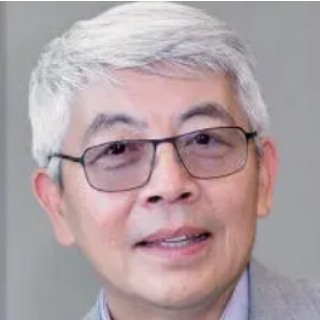
Professor Kent Deng
• Professor of Economic History, LSE
• Fellow of the Royal Historical Society (FRHistS)
• PhD in Economics
Professor Kent G. Deng holds a PhD in Economics and is currently Professor of Economic History at LSE, FRHistS, and a renowned scholar in economic history and the Chinese economy. He joined LSE in 1995, responsible for teaching courses on Chinese Economic History, Asian Economic Development, and Global Economic History, and has been shortlisted multiple times for LSE’s Excellence in Education Awards. His research spans China’s long-term economic growth, comparative East-West economic development, and global history. He has also served as a visiting professor at Tsinghua University and Peking University. His research and insights are frequently cited by international media such as the BBC, Bloomberg, and NBC News, giving him broad international influence in his field.
Dr Chris Blunt
• Associate Professor (Education), LSE
• Co-Director of LSE100
• PhD in Philosophy
Dr Chris Blunt holds an MPhil in History and Philosophy of Science from the University of Cambridge and a PhD in Philosophy from LSE. He is currently an Associate Professor(Education) at LSE and serves as Co-Director of LSE100. LSE100 is LSE’s interdisciplinary, compulsory core course for all undergraduate students. Considered as a cornerstone of the school’s academic training system, LSE100 is designed to develop students’ skills in evidence analysis, interdisciplinary thinking, and public policy judgment through real-world issues. Since joining LSE in 2011, Dr. Blunt’s research has focused on the philosophy and AI, covering topics such as machine learning and language models, as well as issues of evidence and decision-making from multiple perspectives, including medical clinical practice, philosophy, policy, and ethics. -
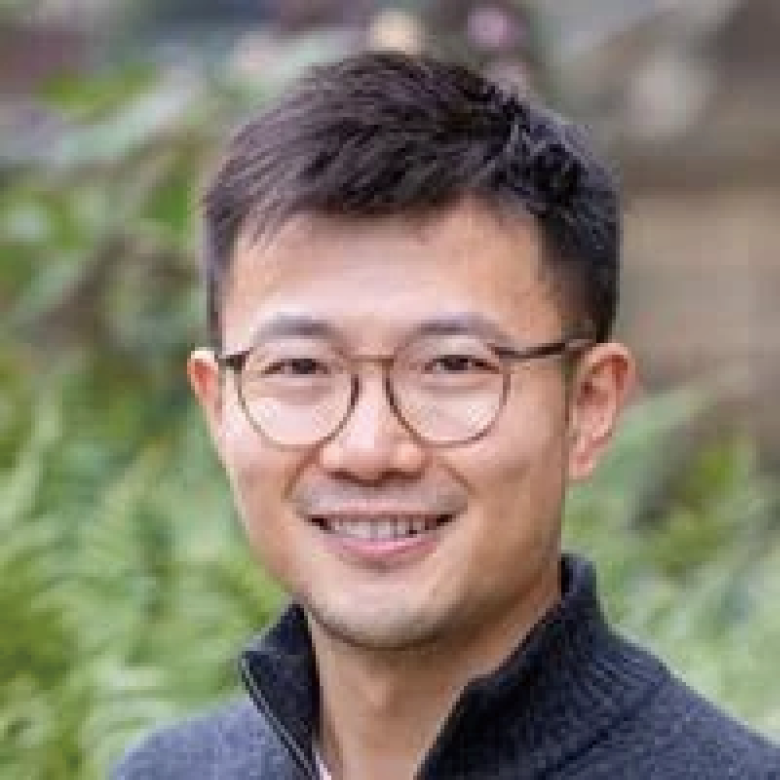
Dr Cameron Peng
• Assistant Professor of Finance, LSE
• Research Affiliate at the Centre for Economic Policy Research (CEPR)
• PhD in Financial Economics, Yale
Dr. Cameron Peng holds a Ph.D. in Financial Economics from Yale and is an Assistant Professor of Finance at LSE, and a Research Affiliate at the CEPR. He is a young scholar in the fields of behavioural finance, asset pricing, and household finance. As an excellent young faculty member at LSE teaching courses such as asset pricing, principles of finance, and risk management, he has been awarded the LSE’s Excellence in Education Award three times consecutively. His research focuses on investor behaviour and expectation formation, demonstrating rapidly growing international influence in the field of behavioural finance.
Course Overview

This course aims to offer to those who would like to apply to LSE for undergraduate studies in Economics and Finance. It introduces ideas from the study of the global economy, corporate finance, and the economic impacts of the AI era. It incorporates one of the three core themes from LSE100: LSE’s compulsory undergraduate course, focusing on real-world issues such as “Who should control AI? ”It trains students to evaluate different explanations from multiple perspectives, including economics, politics, society, and ethics, and to form well-reasoned analytical judgements. Through a combination of teaching by current LSE faculty, lectures by industry experts, and corporate visits, the course helps students understand, in the LSE academic tradition, how economics is used to analyse real-world problems, laying a solid foundation for their future studies in higher education.
Aligned with the Academic Framework of LSE100
LSE100 is a compulsory credit-bearing course for all first-year undergraduate students at LSE. It runs alongside the four core first-year courses and forms a central component of LSE’s undergraduate academic training system. The course is designed to engage students with real-world issues, encouraging them to think from interdisciplinary perspectives, including economics, politics, and society. Our programme is taught by Dr Chris Blunt, Co-Director of LSE100, who delivers content on AI governance from the LSE100 curriculum, exploring the political economy of the AI industry. Three Core Themes of LSE100:
- How can we transform our climate futures?
- How can we control AI? - this theme is included in the programme
- How can we create a fair society?
Sample Schedule
*The schedule is subject to final arrangement. In case of accidents, there will be substitute visits to ensure the experience unaffected.
| 日期 | 上午 | 下午 | 下午 | 晚上 |
| 9﹕30-12﹕45 | 14﹕30-17﹕00 | 18﹕00-19﹕30 | 20﹕00-21﹕00 | |
| Day 1 | Arrive in London and check in at the hotel | |||
| Day 2 | London City Tour: Visit Big Ben, 10 Downing Street, and the British Museum. | Complete coursework & Prepare for final
presentation |
||
| Day 3 | Visit the University of Cambridge: Explore Cambridge independently and enjoy punting on the River Cam | |||
| Day 4 | Welcome Ceremony & LSE Campus Tour: Explore the LSE campus and learning resources, and begin the London academic experience |
Thematic Session:
|
LSE Public Lecture(Optional): Join LSE students for talks by globally renowned scholars and leading experts invited by LSE, take part in inperson and online Q&A sessions, and experience LSE’s academic community firsthand
*This is an optional activity. Sessions will be selected based on the LSE official events schedule and the programme timetable. Lectures may be held on campus or online; specific topics, formats and times will be confirmed during the programme. *As the programme takes place during the LSE term, students will have the opportunity to attend public lectures alongside current LSE students.These on-campus academic events are typically open only to LSE students. |
|
| Day 5 | Thematic Session:
• Seminar (Irrational Financial Decisions&Their Impact on Markets): Manage a simulated £100 million investment fund and make real-time buy, hold and sell decisions |
Academic Visits:
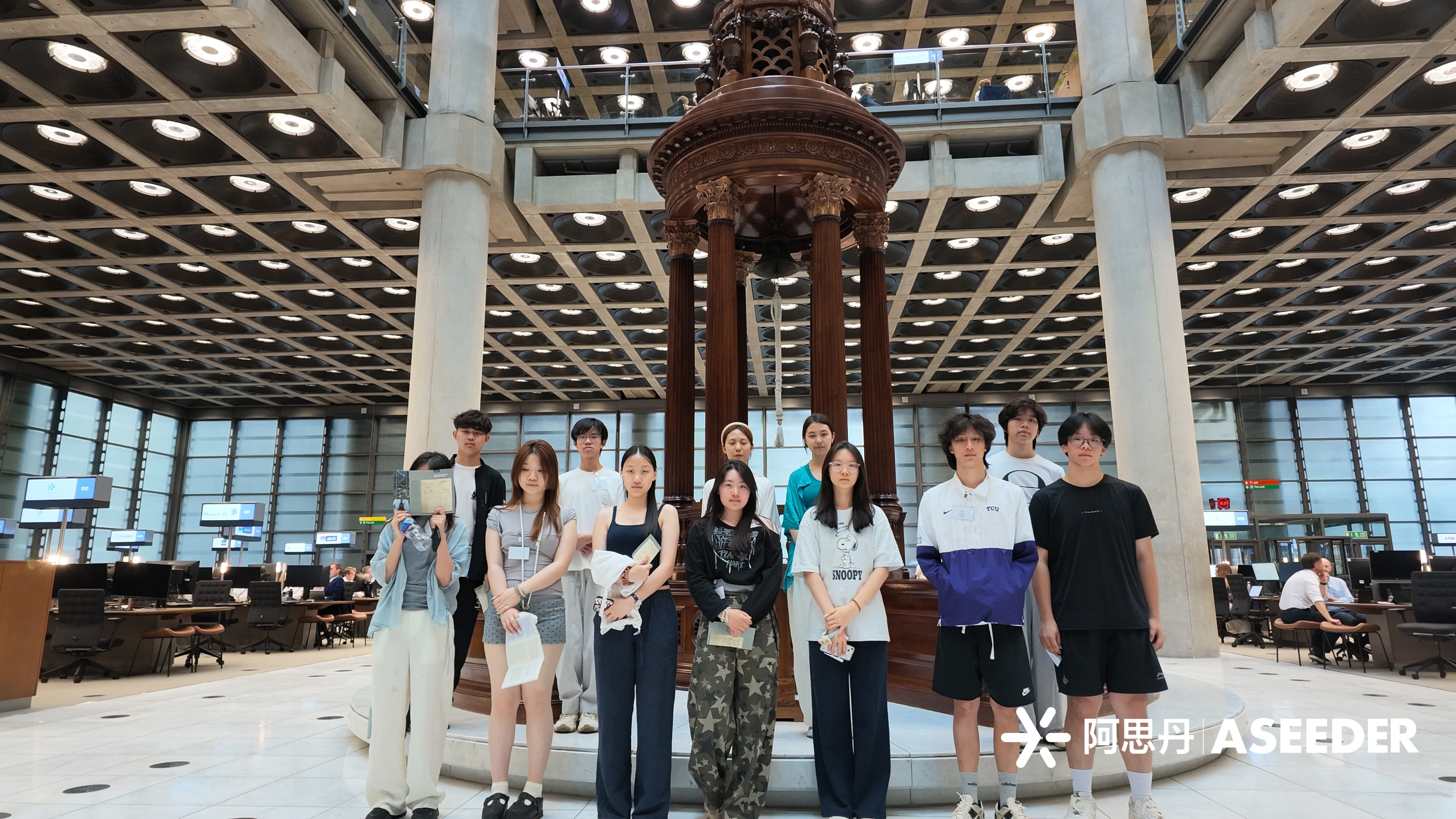
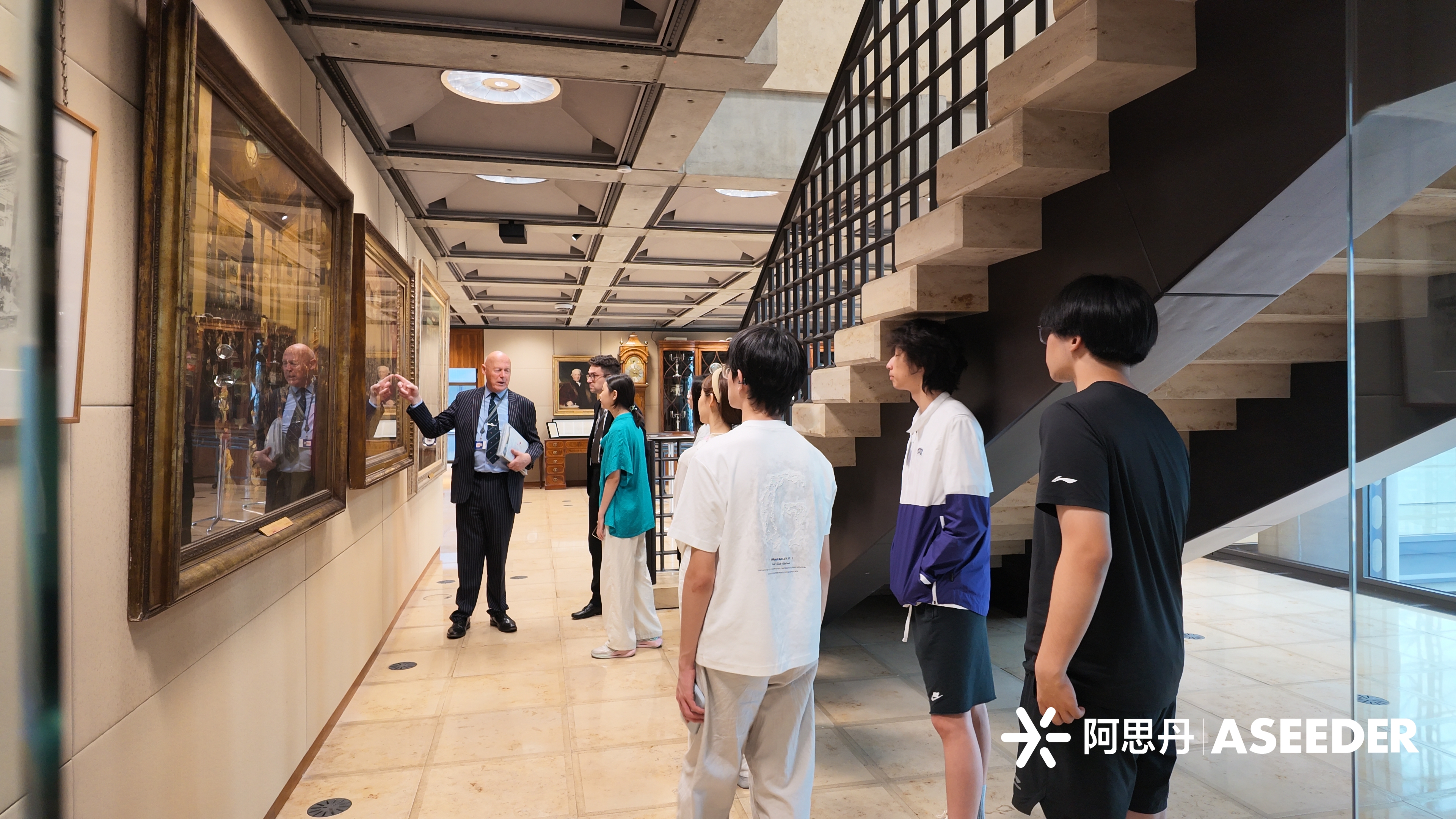
Visit the Bank of England Museum and Lloyd’s Building to explore central banking and financial history, global insurance markets, risk management, international finance and London’s financial culture |
||
| Day 6 | Thematic Session:
• China’s leadership in economic performance by 1850 AD: Explore China’s historical position in the global economy and its long-term economic development.• Seminar (What Drove China’s Rise as a Global Economic Power?): Investigate the question through multiple perspectives, including geography, population, technology, global trade and markets |
Academic Visits:
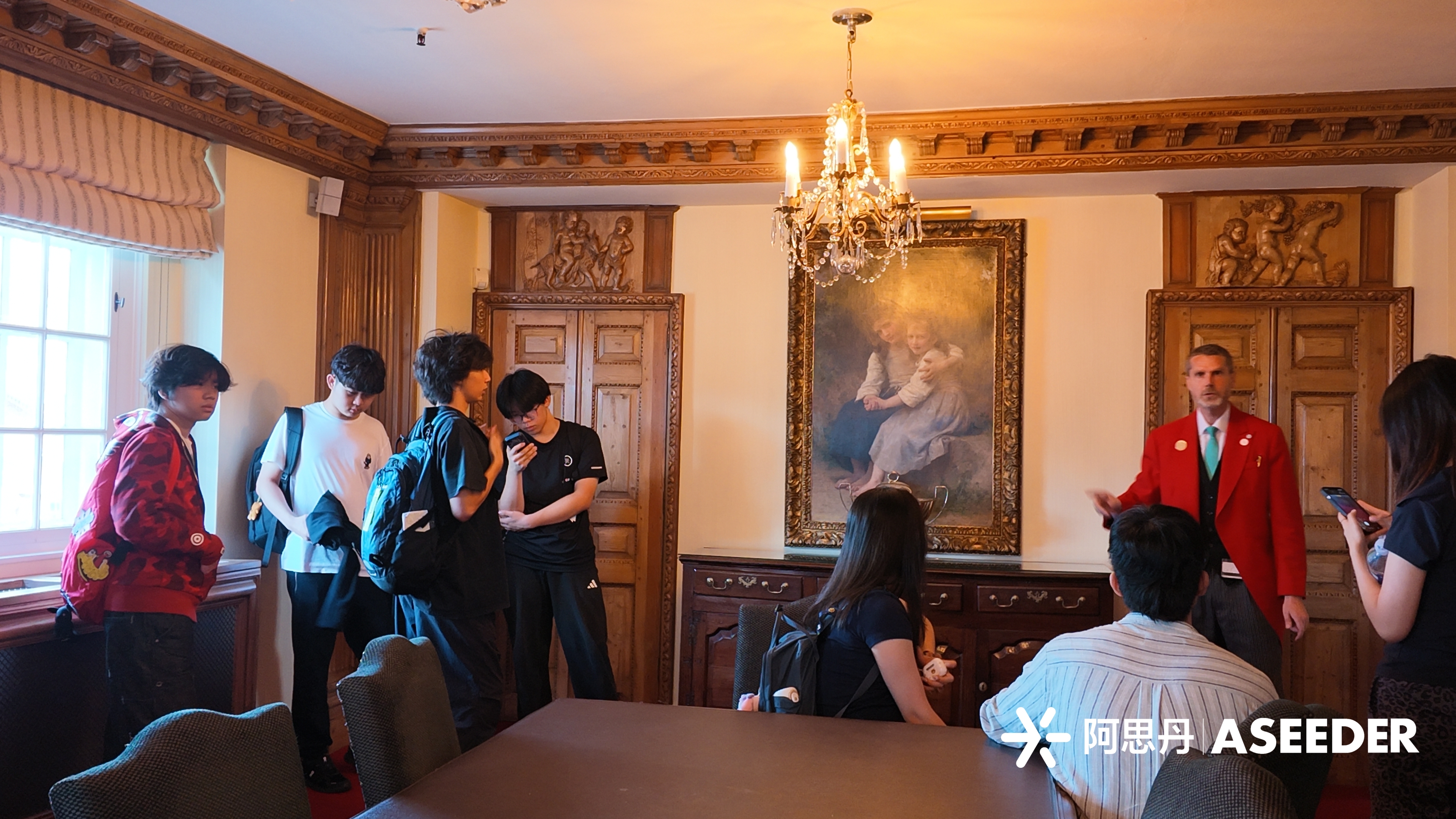
Fortnum & Mason: Explore one of Britain’s iconic luxury retailers and experience British branding, premium retail and business culture |
||
| Day 7 | Thematic Session:
|
Academic Visits:
Treasure Hunt in London’s New Financial Centre: Explore Canary Wharf through a team treasure hunt and discover how London’s historic Docklands transformed into a global financial centre |
||
| Day 8 | Thematic Session:
• Group Presentation Preparation |
Group Presentations & Graduation Ceremony
Social with LSE Students (Friday Drinks): Meet current LSE students and exchange perspectives on academic life, study experiences and |
||
| Day 9 | Departure | |||
Programme Highlights
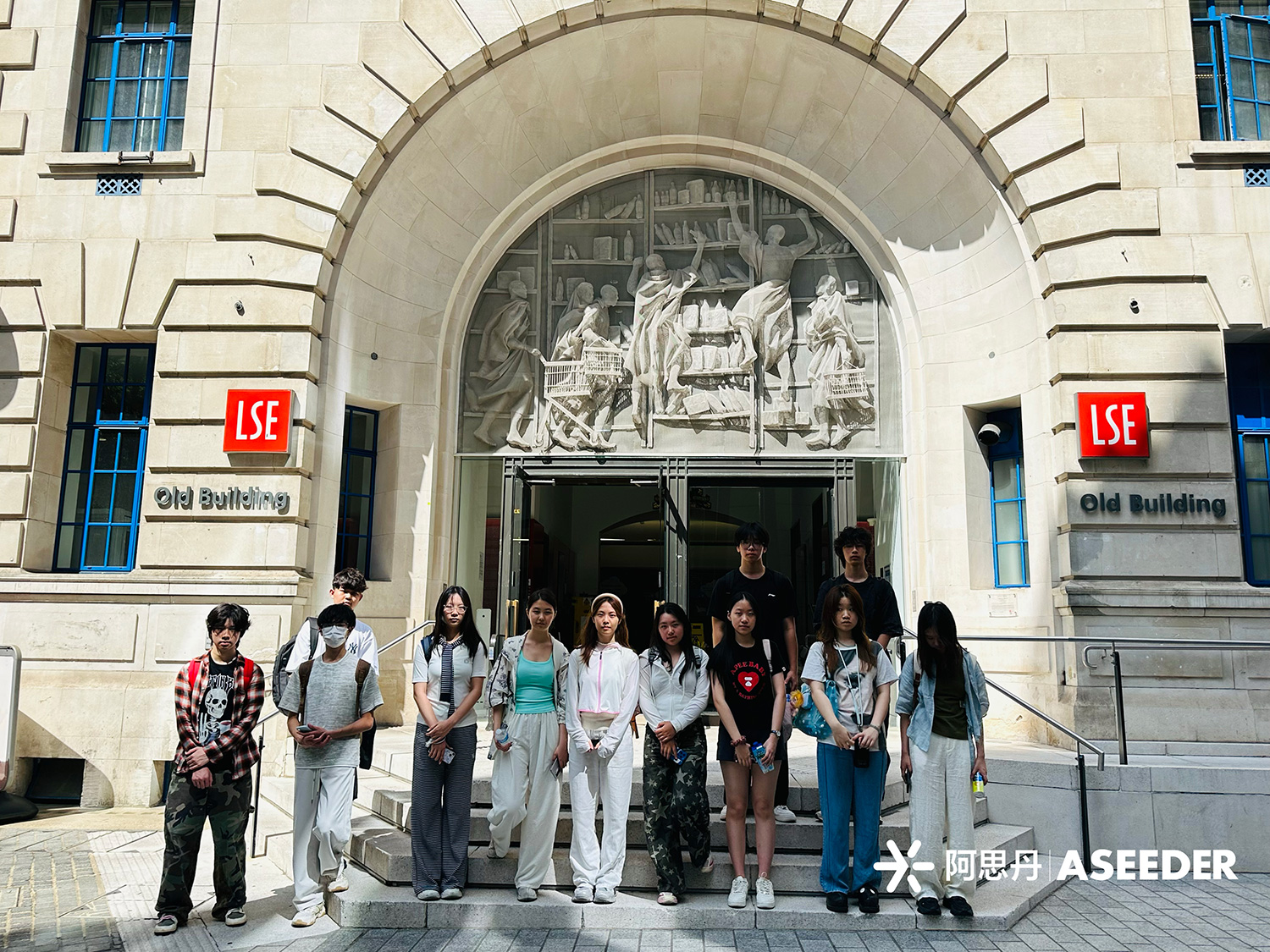
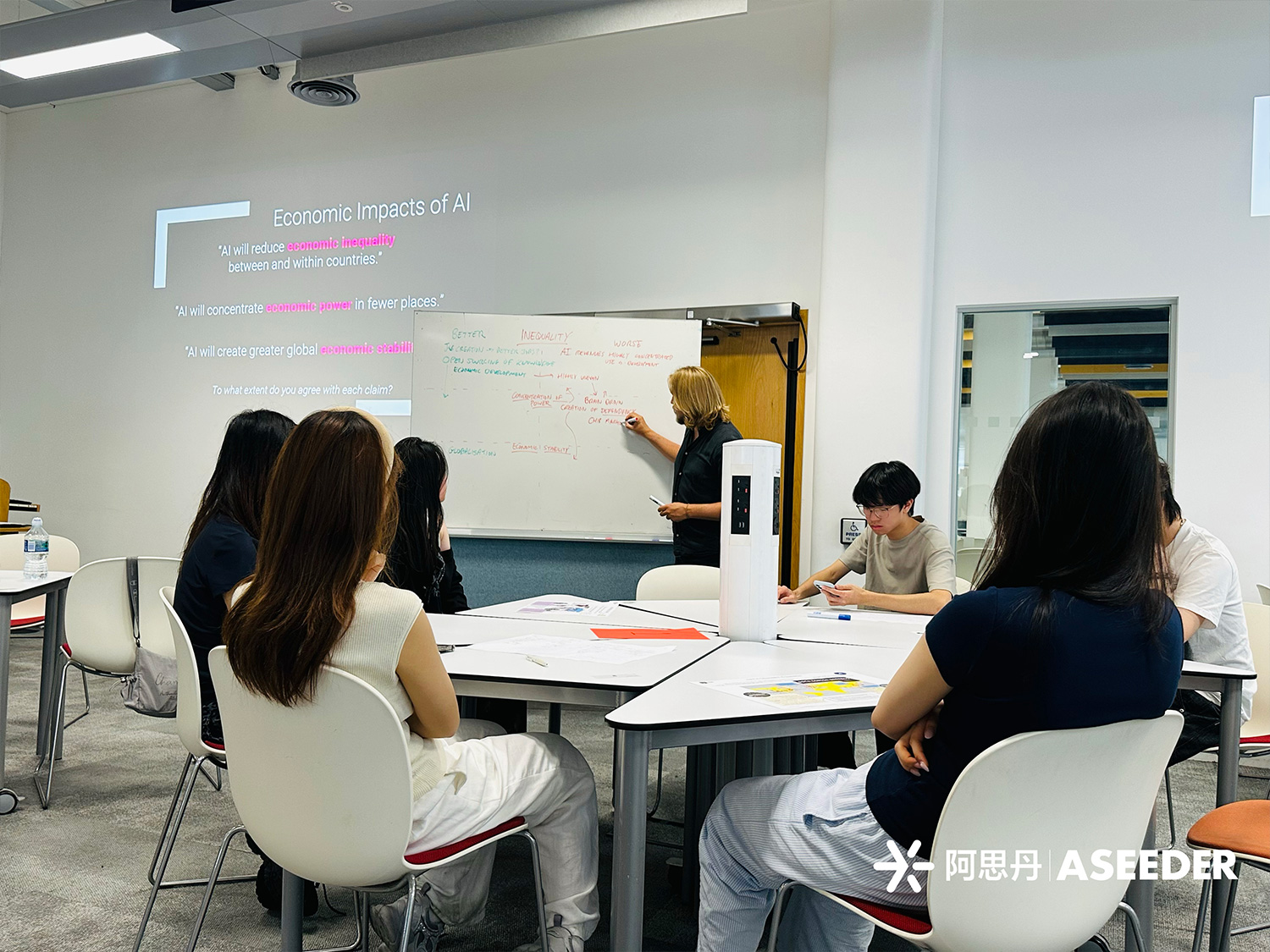
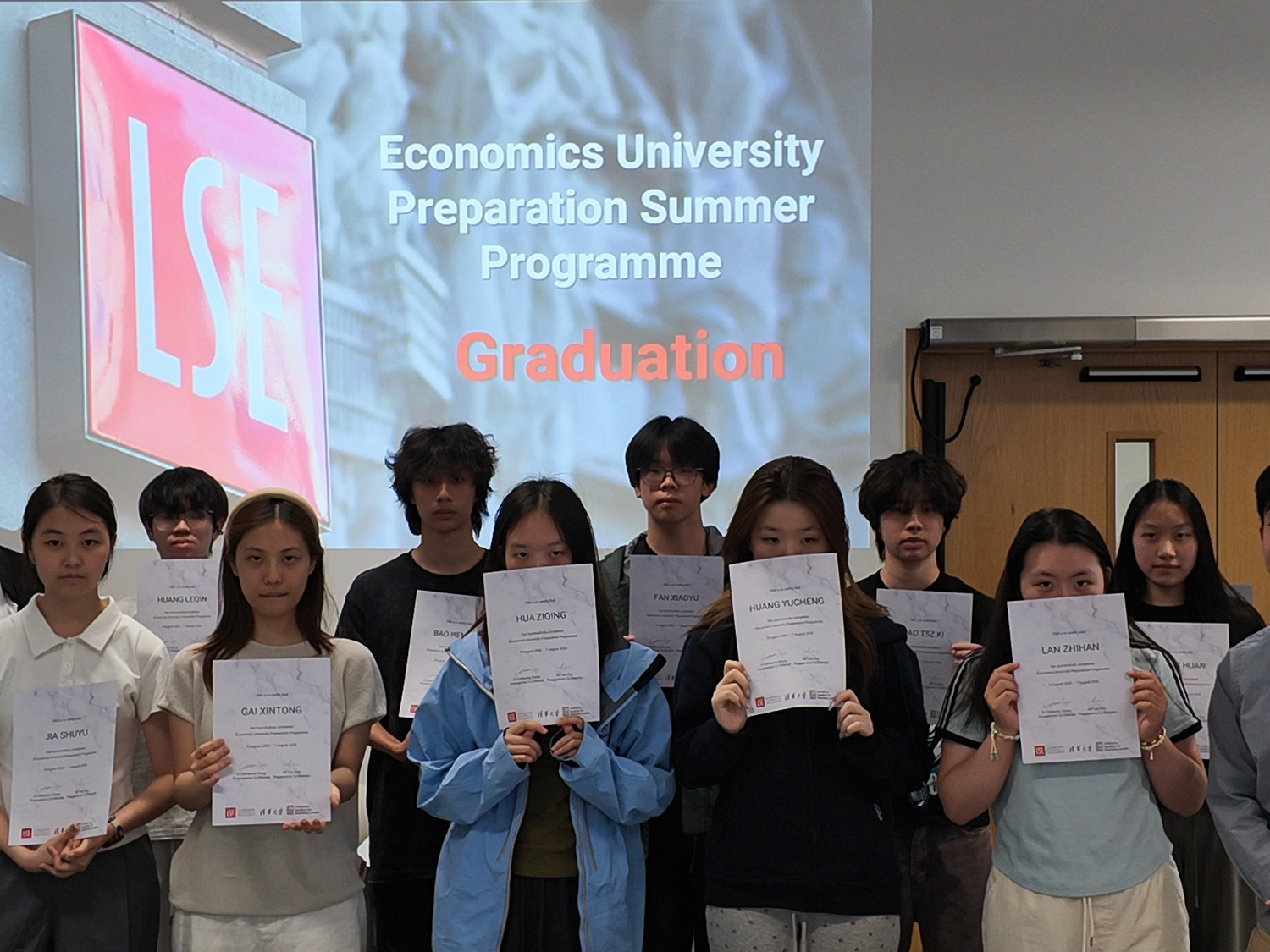
This programme was a rewarding experience, both academically and personally. I learned about economic bubbles for the first time and found connections with what I had studied before. I was particularly interested in the stock market and developed a deeper understanding of it through the course. It also became the focus of my final presentation, and while preparing my PPT, I independently explored additional course content and financial terminology.
I especially enjoyed visiting the Lloyd’s Building and Fortnum & Mason.The Lloyd’s Building was impressive me to a new way of understanding how a building operates. Fortnum & Mason stood out for its rich history, interiors and distinctive products.
— Hua, BASIS International School Park Lane Harbour
Academic Exploration in London
In London, economics extends far beyond the classroom, coming to life through real-world financial systems and business environments. Students will explore the Bank of England Museum and Lloyd’s Building to understand central banking, financial history, global insurance, and risk management; visit the historic Fortnum & Mason to discover British commercial culture through branding and consumer experience; and explore Canary Wharf to examine London’s transformation into a global financial hub. Through immersive field experiences across the city, students will connect economic theories with real-world applications in finance, business, and urban development.
Application
■ Date:
Feb.12 - Feb.20, 2027 (9 Days)
■ Subject:
Economics
■ Grade:
10-12
■ Application Process:
1. Language Proficiency Requirements:
To qualify for the CIBL@LSE Economics University Preparation Programme, applicants must satisfy one of the following English language criteria:
- Standardized Test Scores: IELTS 6 .0,TOEFL iBT 80 (pre-Jan 2026)/4.5 (post-Jan 2026), or equivalent.
- Complimentary Interview : Applicants without standardized scores may contact a program consultant to arrange a complimentary online or telephone English interview.Admission eligibility will be granted upon successful completion. Note: If the language threshold is not met, we will assess the applicant’s broader academic profile to recommend suitable alternative programs
2. Registration & Official Admission:
Upon passing the language proficiency verification, applicants must complete the registration and tuition payment to secure their place in the program. Once payment is confirmed, students will receive an official admission email from the CIBL@LSE Economics University Preparation Programme.
3. Pre-Program Assignment:
To enable instructors to assess students’ academic backgrounds and to help participants clarify their personal learning objectives, the CIBL@LSE Economics University Preparation Programme requires all students to complete a pre-program assignment prior to the start of the session. The full prompt, formatting requirements, and the online submission link will be distributed alongside the official admission email.
■ Fee:
Register by Nov 1, 2026 (23:00 Beijing Time) to receive a 500 RMB ASEEDER scholarship. (ASEEDER offers scholarship deductions of up to STEM Challenges. For more information, please check the ASEEDER official early-bird discount, which can be combined with the 1,000 RMB for students who have won awards in ASEEDER website or consult with an ASEEDER teacher.)
- Includes: Tuition, accommodation (one bed in a twin room), breakfast, excursion and exploration, ASEEDER group leader service fee, pick-up and drop-off fees from the airport (only available for students with the same flight as ASEEDER), transportation for visits in London and Cambridge; Underground fares for company visits;, international insurance, learning materials.
- Excludes:
- International round-trip airfare (we will select 1 city for departure and arrival from Beijing/Shanghai/Shenzhen/Hong Kong. The final assembly city will be determined based on overall enrollment and flight availability.You can use a third-party service or ASEEDER’s unified service. Please confirm with the ASEEDER teacher before purchasing tickets.)
- Visa Service Fee (optional): ASEEDER Visa Worry-Free Service guarantees that in the case of visa rejection other than the client’s own, eligible applicants will either receive a full refund of the visa service fee or a complimentary reapplication, and the full program fee will be fully refunded, ensuring no financial loss.
- Lunch and Dinner during the program: Food is available at the restaurants near the teaching venues or around the hotel area. Meal expenses average 20 pounds